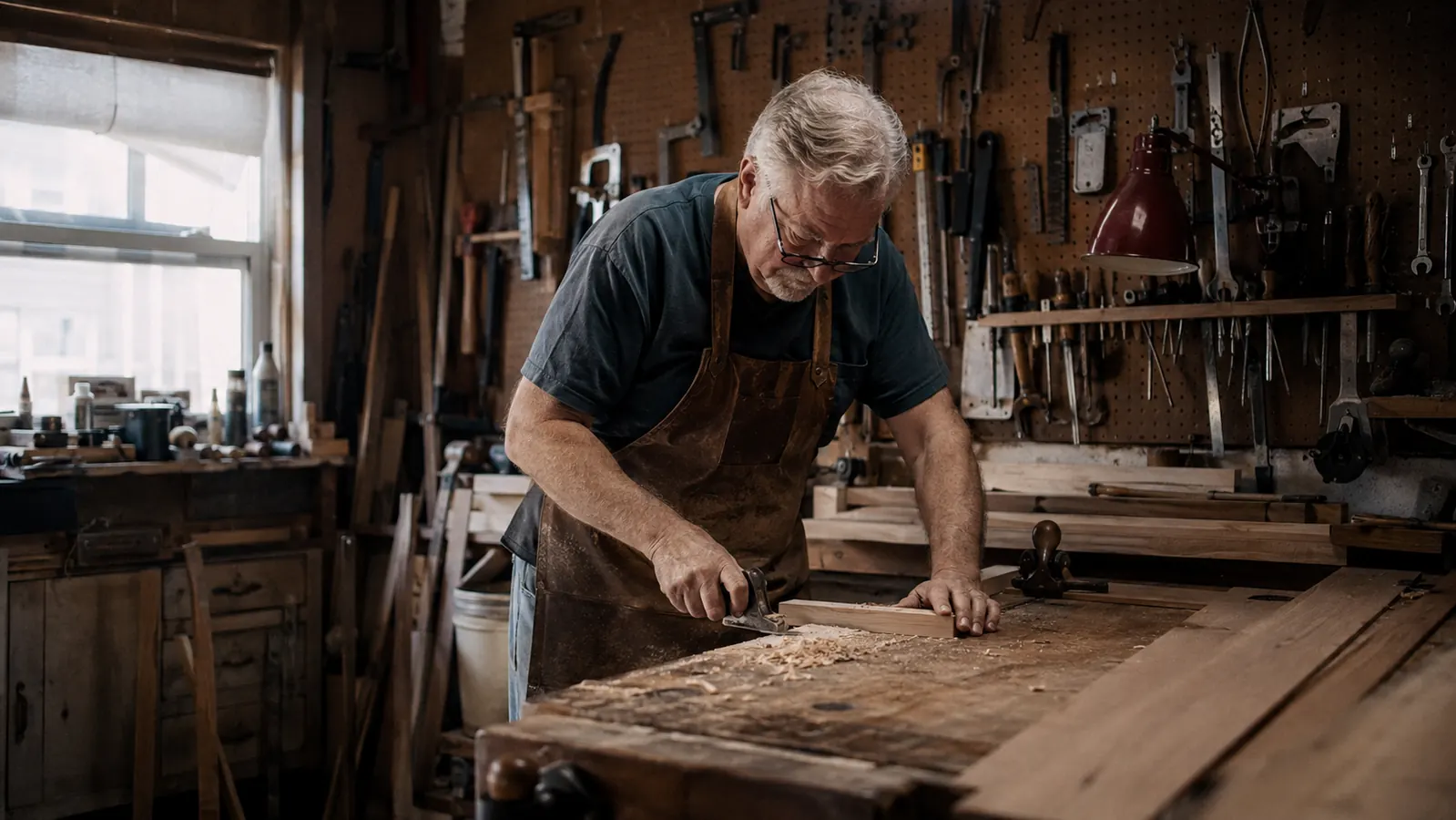
My shop is a one-car garage, 12 by 20 feet, with a wood stove in one corner and a shop vac that never quite keeps up. Every tool in there has to earn its footprint. The IRWIN Quick-Grip one-handed mini bar clamps earned theirs in a single afternoon, and I have been adding to the collection ever since.
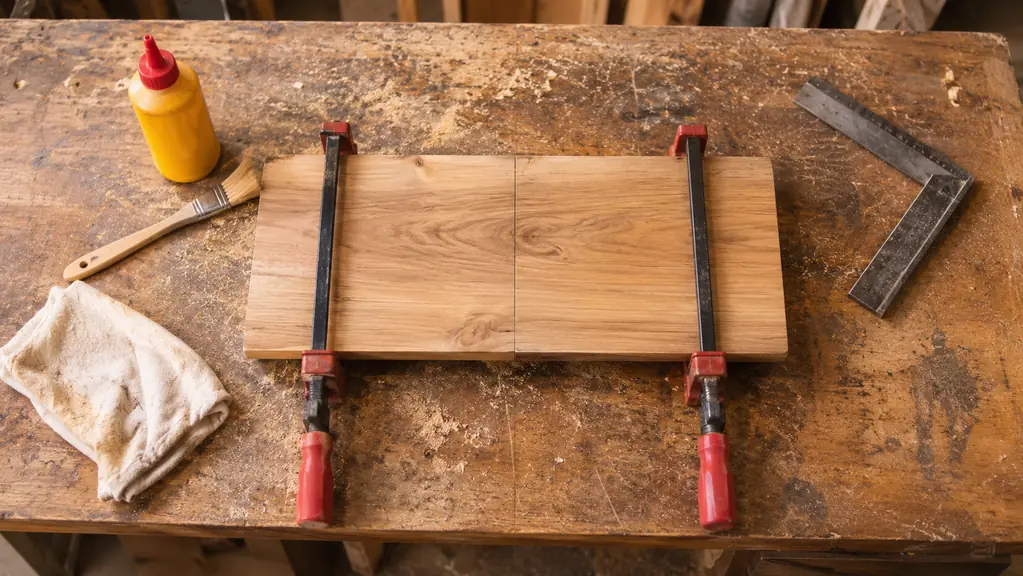
Here is the problem they solved. A glue-up wants four hands. You spread the glue, set the joint, then need to hold both pieces still while you reach for a clamp that takes two hands to open. So you grab a spring clamp, it pops off, and now there is glue on the bench and a joint out of square. The Tuesday that finally broke me, I was gluing up a small drawer box out of maple, got two spring clamps on, and watched the third side slide a good sixteenth of an inch while I was reaching for a fourth. I knocked it apart with a mallet, scraped the glue off with a putty knife, and did the whole thing over. The false fix is bigger clamps. Heavier F-style clamps hold more, but they are clumsy on small parts and they will not fit where a drawer box goes. A small clamp with a one-handed trigger is the tool that actually matches the work a home shop does.
Four clamps that set with one squeeze, not two hands
The set I keep on the bench and reach for before anything else in a glue-up.
Amazon See the 4-pack on Amazon →One trigger hand frees the other for the glue-up
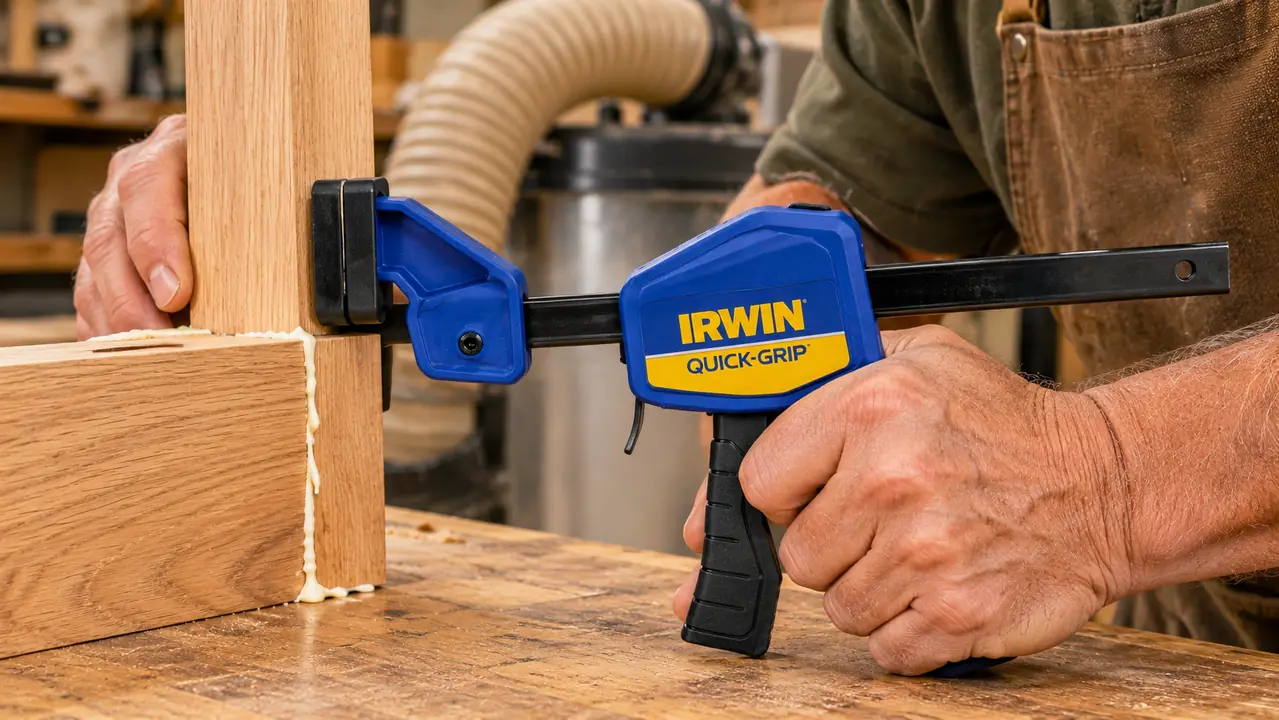
A squeeze opens and closes the clamp. That sounds like a small thing until you are holding two glued boards that want to slide apart. My left hand stays on the panel, my right hand sets the clamp, and nothing moves. I used to hold a spring clamp in my teeth during a glue-up. I do not do that anymore, and my dentist is relieved.
Six inches of reach covers almost everything a home shop builds
Most of what leaves my bench is small. Birdhouses, toy cars for my grandson Tyler, end tables, repair jobs for neighbors. A six inch clamp spans the joints on all of it without a bar hanging off the edge of the bench waiting to be knocked onto the floor. The last set of bookshelves I built had a face frame with rails about three inches wide, and these clamps spanned those with room to spare. If your work is casework and blanket chests, this is the wrong clamp and I say so below.
140 pounds of force is already more than a glue joint needs
The IRWIN clamp is rated for 140 pounds of clamping force. A yellow glue joint on hardwood needs a firm, even squeeze, not a contest. Past a certain point you are just pressing the glue out of the seam and starving the joint. I learned that the hard way on a maple cutting board, cranking an old bar clamp until glue ran down the end grain, and the seam still failed three weeks later. This is not the strongest clamp on the shelf and it does not need to be. It needs to hold the pieces still while the glue does its work, and it does.
A hardened steel bar that does not bow when you lean on it
The body is resin, but the bar inside it is hardened steel, and the bar is what takes the load. Cheap all-plastic clamps bow in the middle under pressure and the joint creeps open overnight. I have not had that happen with these. I tightened a set of four on a small end table apron at about nine at night, went in for supper, and checked them the next morning after coffee. The seams were still closed and the clamps had not moved on the wood.
The whole four pack weighs about a pound
Roughly 454 grams for the set. That matters twice in a small shop. It matters on the pegboard, which has to hold everything I hang on it. And it matters at the bench, because a heavy clamp set down on a small assembly drags it out of square before you ever get it tight. Light clamps sit down where you put them.
They get in where a long F-style clamp cannot go
Inside a drawer box, behind a face frame, between two shelves already installed. A long bar clamp will not fit there, and even when it does, the handle is on the wrong side of the work. These are short enough to reach in and the trigger sits right where your hand already is. That is the difference between fixing a joint and disassembling the cabinet to fix it.
The jaws hold firm without bruising a sanded face
The jaws grip hard and protect the workpiece from scratches and scuffs, which is the whole point when you are clamping something you have already sanded. On raw wood I do not bother with a caul. On anything with a finish on it, or on a neighbor's repair job, I still slip a scrap of paper between jaw and surface. Cheap insurance.
Four clamps means you stop rationing clamps
I bought one first, then went back for the four pack. Four is enough for a small panel, a drawer, a birdhouse or a set of shelves at one go, so you stop holding one clamp with your knee while hunting for another. Two live on the bench and two live on the wall. Nobody in this shop has run out mid-glue-up since. If you are buying your first set, the IRWIN four pack is the easier way in than picking up singles one at a time.
A third hand at the drill press and the sander
Half my clamp use has nothing to do with glue. Holding a small part steady while I mark it. Holding a stop block while I set a fence. Holding a piece of trim while I touch up an edge. Small, light, one-handed clamps are the ones you grab for those odd jobs, and the big ones stay on the wall where they belong.
A full lifetime guarantee, so a broken one is a phone call
IRWIN warrants each hand tool against defects in material and workmanship for life. I have never had to use it on these, and I have dropped them off the bench more than once. The point is not the paperwork. The point is that a tool with that behind it is not a disposable purchase, and in a shop where every dollar has to justify itself, that counts.
What I'd Skip
If your work is large casework, skip these. The cherry blanket chest I built for Jen needed clamps that reached across a panel, and six inches was never going to do it. Own a few longer bar clamps too, and reach for those when the glue-up is bigger than the clamp. I would also skip them if you are the kind of woodworker who tightens until something creaks, because 140 pounds of force is the ceiling and a longer clamp is the honest answer for that job. What these are is the everyday clamp: the one already in your hand before you have thought about it, on the small joints that make up most of the work in a garage shop.
A clamp you can set with one hand gets used. A clamp that needs two hands and a third for the panel stays in the drawer.
The clamp that lives on the bench, not in the drawer
Six inch reach, one-handed trigger, four to a pack. Enough for the small glue-ups that fill a home shop.
Amazon See the IRWIN 4-pack on Amazon →