

Six-inch bar clamps are the tool I reach for when a job is too small for a pipe clamp and too fussy for a spring clamp. I am 66, retired from the union electrical trade, and I have been woodworking for about 30 years in a one-car garage outside Philadelphia. The shop is 12 by 20 feet, with a wood stove in the corner and a shop vac that never stays where I put it. Space is tight. A clamp that needs two hands and a clear three-foot radius around the bench does not get used. I bought the IRWIN Quick-Grip 1964758 four-pack a year ago for birdhouse roofs and cutting board glue-ups. It has stayed on the bench ever since.
The set includes four 6-inch one-handed mini bar clamps. IRWIN uses resin bodies and hardened steel bars, and the clamps deliver 140 pounds of force. The trigger releases the clamp instantly, which matters when your other hand is holding a glued joint closed. The grip surfaces are made to protect the workpiece from scratches and scuffs. The set weighs 454 grams, and the package measures 21 by 8 by 2.5 inches. None of that is exotic. It is a small clamp done well enough that I stopped thinking about it.
The Quick Verdict
A four-pack of 6-inch one-handed clamps that earn their drawer space. Buy them for small glue-ups, jigs and birdhouse work, not for building a workbench.
Amazon Check Today's Price →The clamp that holds the joint while your other hand reaches for the next piece
Four 6-inch IRWIN Quick-Grip mini clamps, one-handed triggers, and 140 pounds of force for small workpieces and tight spots. I keep two on the bench and two in the drawer.
Amazon Check Availability on Amazon →How I've Used It
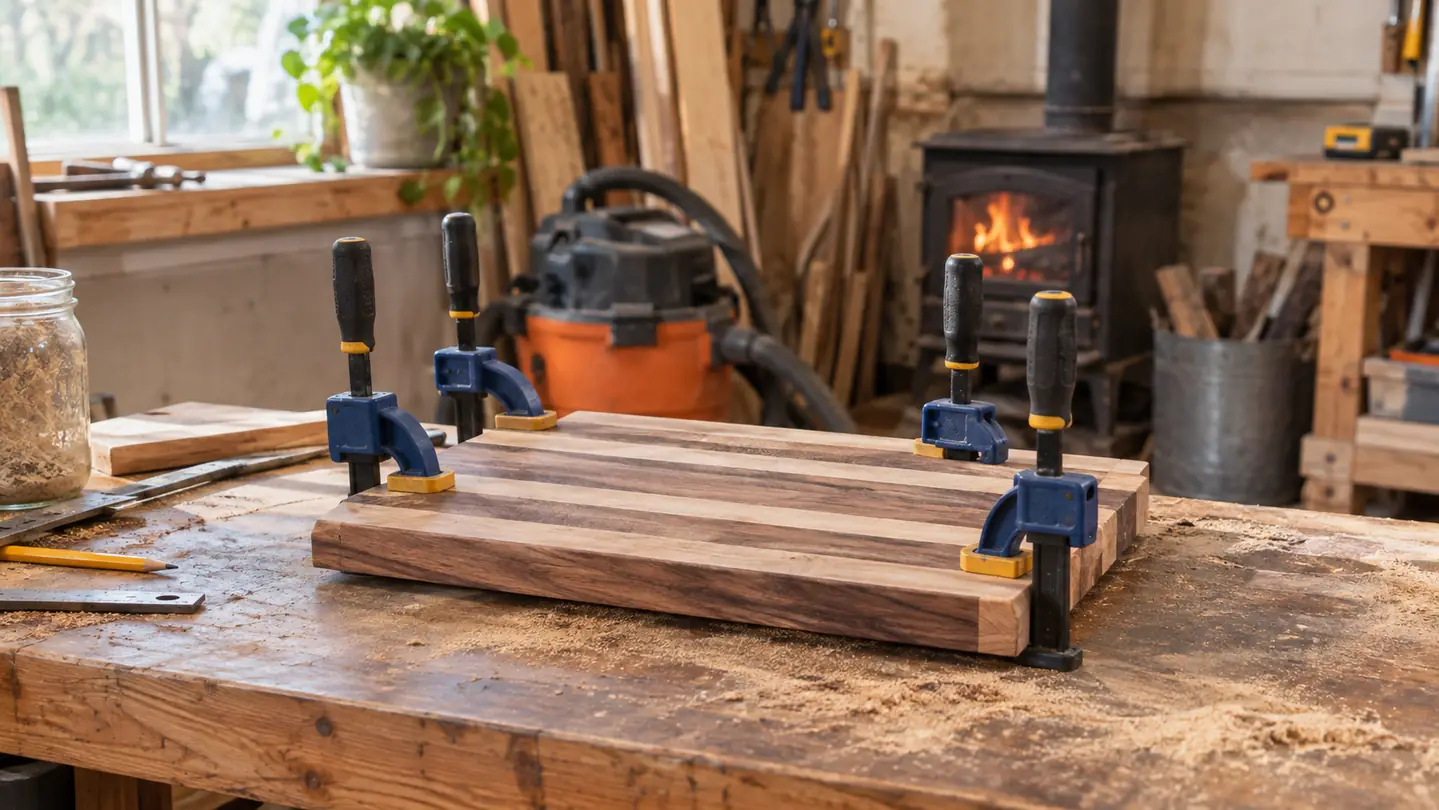
I bought the four-pack in late winter, right before I started a maple cutting board for my daughter Jen. The board was 12 by 18 inches, made from strips of hard maple and walnut. A glue-up like that wants clamps every few inches, and I do not own enough long clamps to do it in one pass. I used the four IRWIN minis across the center and ends, with two older F-style clamps filling the gaps. The 6-inch opening handled two layers of 3/4-inch strips plus a caul. The hardened steel bars stayed straight at the pressure I was using. I was not trying to crush the wood. I was trying to pull the joints closed and keep them flat. The minis did that.
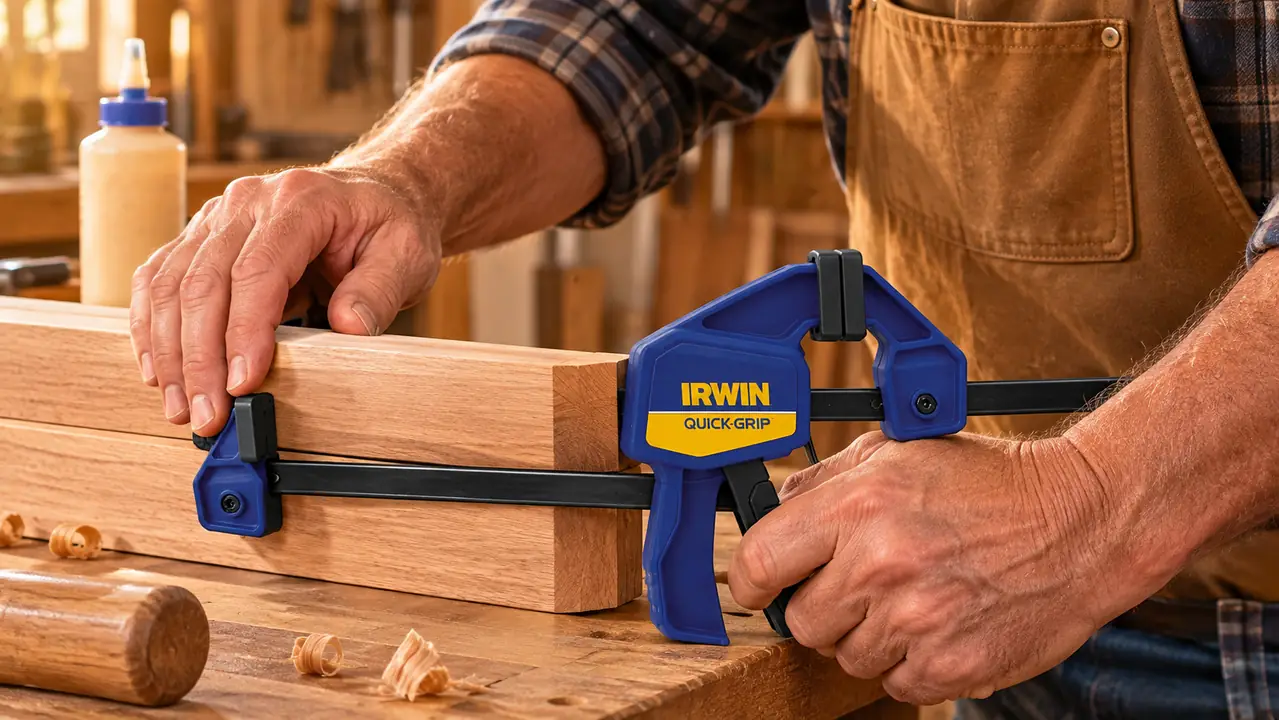
After the cutting board, they went into the rotation for end tables and bookshelves. I used them to hold a back panel against a carcass while the glue dried, to clamp a jig to the drill press table, and to keep a small drawer box square while I tapped the joints together. The one-handed trigger is the reason they get reached for. I can squeeze the trigger to open the clamp, place it with the same hand, and use my other hand to hold the workpiece where I want it. In a tight shop, that is the difference between a clamp that gets used and one that stays in the drawer.
My grandson Tyler, who is 12, helps me on some Saturdays. He likes building birdhouses, and the minis are about the right size for his hands. I set the clamp, he squeezes the trigger, and I watch his fingers. The clamps are small enough that he can handle them without fighting the tool, and they do not leave marks on the pine. That is not a feature IRWIN advertises. It is the reason the four-pack stays on the bench instead of in the bottom drawer.
I also used them on a set of bookshelves for the living room. The shelves were 30 inches long, and the clamps held the face frame pieces to the carcass while the glue set. I could not clamp the whole frame at once, so I worked in sections. The minis were small enough to fit between the shelves and the bench, and the one-handed trigger let me set them while I held the frame in place. That job would have been slower with spring clamps. It would have been impossible with one hand and no clamp at all.
What the 6-Inch Clamp Gets Right
The first thing is the trigger. IRWIN calls it a one-handed trigger, and that is accurate. You can open the jaw with a squeeze and slide the bar with the same hand. The release is instant enough that I do not have to shake the clamp or pry at it when a glue-up is dry. The second thing is the size. Six inches is small enough to fit inside a drawer box or between the rails of a small frame, and large enough to span a cutting board glue-up or hold a birdhouse roof while the glue sets. The third thing is the weight. At 454 grams for the set, the clamps do not drag a light workpiece off the bench when you let go.
The resin body and hardened steel bars are a sensible combination for this size. The bar does not flex under hand pressure, and the resin body keeps the weight down. I have used cheaper mini clamps where the bar bowed and the jaw twisted. These have not done that. The 140 pounds of force is more than I need for most small work. On a cutting board, I am not trying to starve the joint. I want even pressure and flat boards. The minis give me that without the clamp marks that a metal jaw can leave.
The grip surfaces are also worth mentioning. IRWIN says the clamps protect the workpiece from scratches and scuffs, and I believe it. I have clamped cherry, walnut, maple and pine without a caul on small glue-ups, and I have not found a dent or a black mark. On a finish-ready piece, I still use a scrap of paper or a caul, because that is good practice. But the clamp itself is not the thing I worry about.
The 6-inch size also makes them useful as a third hand on the drill press and the band saw. I clamp a small stop block to the drill press table when I am boring repeated holes in a birdhouse side. The clamp holds the block solid, and the body stays clear of the chuck. I do the same with a featherboard jig on the band saw. These are not the jobs IRWIN markets the clamp for, but they are the jobs that keep it on my bench.
Where the Mini Clamp Falls Short
The obvious limit is the 6-inch size. If you are gluing up a tabletop, a face frame or a thick laminated blank, these are not the clamps for the job. They will not reach across a 20-inch panel, and they will not give you the pressure of a pipe clamp or a heavy F-style clamp. I tried using four of them on a small end table top and ended up adding two longer clamps because the middle of the panel was not pulled down evenly. That is not a knock on the clamp. It is the wrong tool for that glue-up.
The second limit is the count. A four-pack sounds like a lot until you lay out a glue-up that needs eight clamps. I use the four IRWINs with older clamps, and there are still times when I stop and wait for a set to come off another project. If you are starting from zero, buy the four-pack and plan to add more. If you already have a clamp rack, four is a useful supplement, not a full set. The trigger can also be awkward to reach inside a deep drawer box or a narrow frame. That is a geometry problem, not a defect, but it is why I keep spring clamps within reach.
How It Has Held Up
A year in, the clamps have been dropped on the concrete floor, buried under sawdust, and left in the cold shop over a weekend more than once. They still work. The triggers release cleanly, the bars are straight, and the jaws line up. I have not had one crack or lose its grip. I blow them off with the shop vac when the sawdust gets heavy and wipe the bars with a rag. I have not oiled them or taken them apart. For a set that lives in a drawer and gets used on small projects, that is about all the maintenance I expect.
The only wear I have noticed is cosmetic. The resin bodies have a few scuffs from the bench and the floor. The trigger on the clamp I use most has a little more play than it did when new, but it still releases instantly. I would not call that a failure after a year of regular use. I would call it normal. I also checked the bars with a straightedge after a glue-up where I had cranked them harder than usual. They were straight. That is not a laboratory test. It is the kind of check a home woodworker can do at the bench.
I have not used them in a production shop or left them out in the rain. My use is a few hours a week on small projects, plus a burst of work when a neighbor needs a repair. For that kind of use, a year is not a lifetime test. It is enough to tell me the triggers are not fragile and the bars are not soft. If I were clamping eight hours a day, I would expect more wear. I would still expect the clamp to be serviceable.
What I Liked
- One-handed trigger opens and releases the clamp without a fight
- 6-inch size fits drawer boxes, small frames and tight jig work
- 140 pounds of force is enough for small glue-ups and repairs
- Hardened steel bars stayed straight in a year of shop use
- Light set at 454 grams, so it does not drag a small workpiece around
- Grip surfaces have not marked cherry, walnut, maple or pine
- Full lifetime guarantee from IRWIN
Where It Falls Short
- Only four clamps in the pack, which is not enough for a full glue-up
- 6-inch size will not handle tabletops, face frames or thick laminates
- Trigger can be hard to reach inside a deep drawer box
- Not comfortable for every hand, especially large or arthritic fingers
- Not a replacement for pipe clamps or heavy F-style clamps
A year in, the triggers still release instantly, the bars are straight, and the jaws have not marked a finish-ready board. That is what I ask from a small clamp.
Who This Is For
This four-pack is for the home woodworker who does small glue-ups, jigs and repairs in a shop where space is tight. If you build birdhouses, cutting boards, small boxes, drawer inserts, picture frames or toys, the 6-inch size will cover most of what you do. It is also a good set for someone who works on the bench with one hand holding the piece and the other hand running the clamp. The one-handed trigger and the light weight are the reasons to pick these over a cheap spring clamp.
I use them most on glue-ups where I need to hold a joint closed while I reach for the next clamp. They are also handy for holding a stop block or a small jig in place. If your work is mostly large panels and thick stock, save your money and buy longer clamps first. If your work is small and fussy, these will earn their drawer space.
If you are buying your first clamps, start with these and add a few longer F-style clamps when a bigger project comes along. If you already have a full rack, the four-pack is a simple way to add small clamps to the bench without giving up much drawer space.
Who Should Skip It
Skip the 6-inch mini clamps if you are building furniture from thick slabs, gluing up tabletops, or assembling face frames. You need longer bars and more pressure than these are meant to give. Skip them if you only own four clamps and expect this pack to cover a full glue-up. Four is a start, not a clamp rack. And skip them if you are rough on tools and expect a resin body to survive being used as a pry bar. It is a clamp, not a crowbar.
I would also skip them if your hands are large and arthritic. The trigger is easy for me, but a bigger hand may find the mini body cramped. Tyler has no trouble with it. Carol tried one on a repair job and handed it back, because the small grip did not suit her. That is not a defect. It is a fit issue, and it is worth thinking about before you buy four.
If your glue-ups are small and your bench space is tight, this is the four-pack to keep close
The IRWIN Quick-Grip 1964758 set gives you four 6-inch one-handed clamps, 140 pounds of force, and a trigger that releases instantly. I use mine on cutting boards, birdhouses, jigs and small repairs. For big panels, reach for longer clamps.
Amazon See the IRWIN Quick-Grip Mini Clamps on Amazon →