
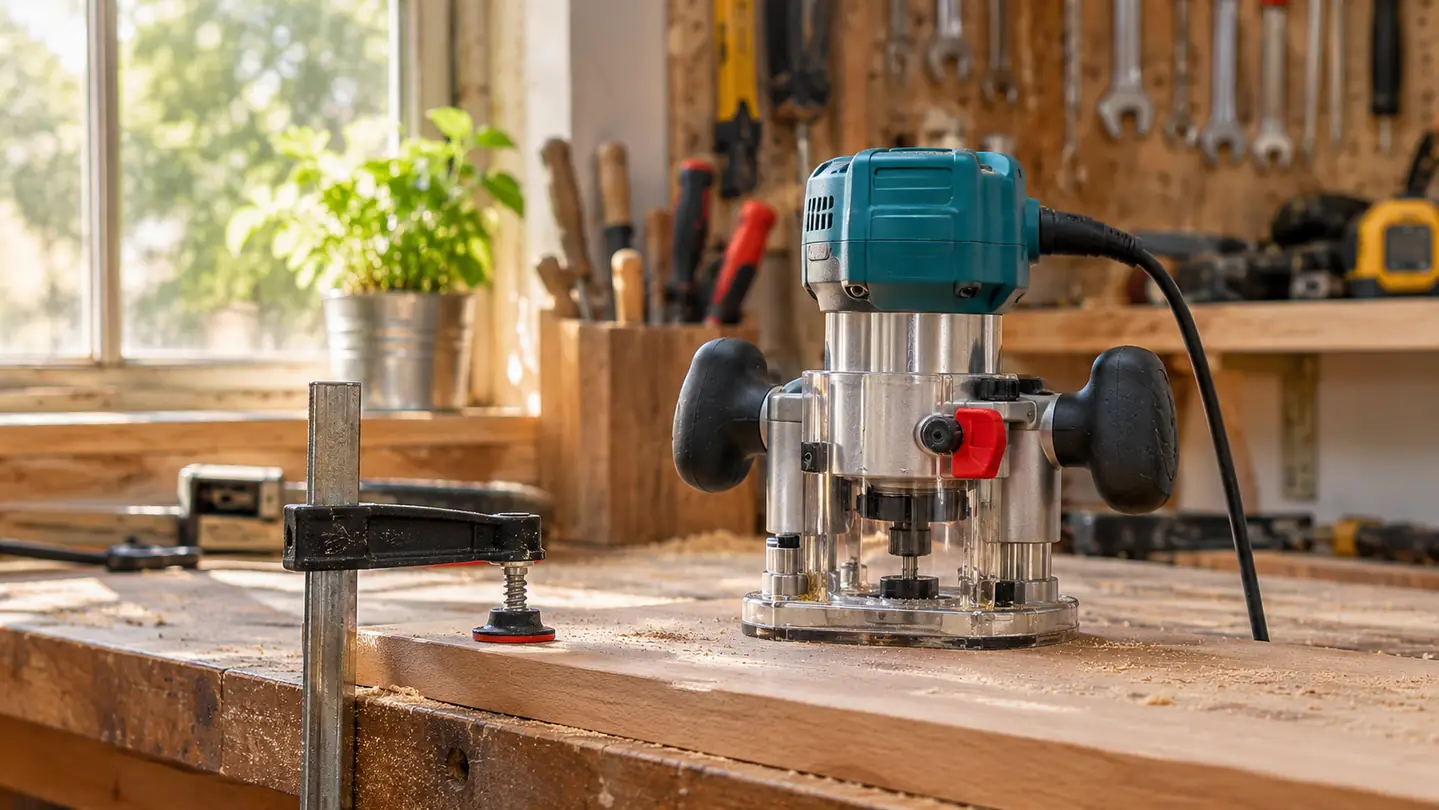
Every few weeks somebody asks me the same question in the aisle at the lumber yard: which compact router belongs on a bench that is already crowded? In a home shop the honest answer usually comes down to two machines, the Bosch Colt PR20EVS and the Makita RT0701C. I have kept the Colt on a shelf in my 12 by 20 garage shop long enough to know its habits, and I have borrowed a friend's Makita often enough to know where it beats the Colt and where it does not. What follows is not a spec sheet recital. It is what I noticed while cutting trim, shelves, and small repair parts for neighbors, usually with a grandson underfoot asking whether he can hold the vacuum hose.
The short answer is this. The Bosch Colt is the easier router to live with in a tight shop, and the Makita RT0701C is the stronger machine once the cut gets serious. If your work is edge trimming, hinge mortises, small roundovers, and pattern work against a guide bushing, the Colt does it with one hand and does not fight you. If you are moving a lot of hardwood in one pass, or you want one motor that can also swing a plunge base for stopped cuts, the Makita earns its extra weight. Everything below is the long version of that sentence.
| Bosch Colt PR20EVS | Makita RT0701C | |
|---|---|---|
| Motor | 1.0 HP, 5.6 amp | 1.25 HP, 6.5 amp |
| Speed range | 16,000 to 35,000 rpm | 10,000 to 30,000 rpm |
| Speed under load | Dials where you set it, sags in a heavy cut | Electronic speed control holds the rpm you set |
| Weight | 3.3 pounds | About 3.9 pounds |
| Bit changes | Self-releasing collet chuck, bit comes free | Standard collet, two wrenches |
| Housing | Plastic body | Aluminum body |
| Bases supplied | Fixed base included, plunge base sold separately | Fixed base included, plunge base sold separately |
| Warranty | Limited 1 year | Limited 1 year |
| Best at | Trim, edge banding, hinge mortises, one-handed work | Heavier stock removal, hardwood, plunge work with the accessory base |
Where Bosch Wins
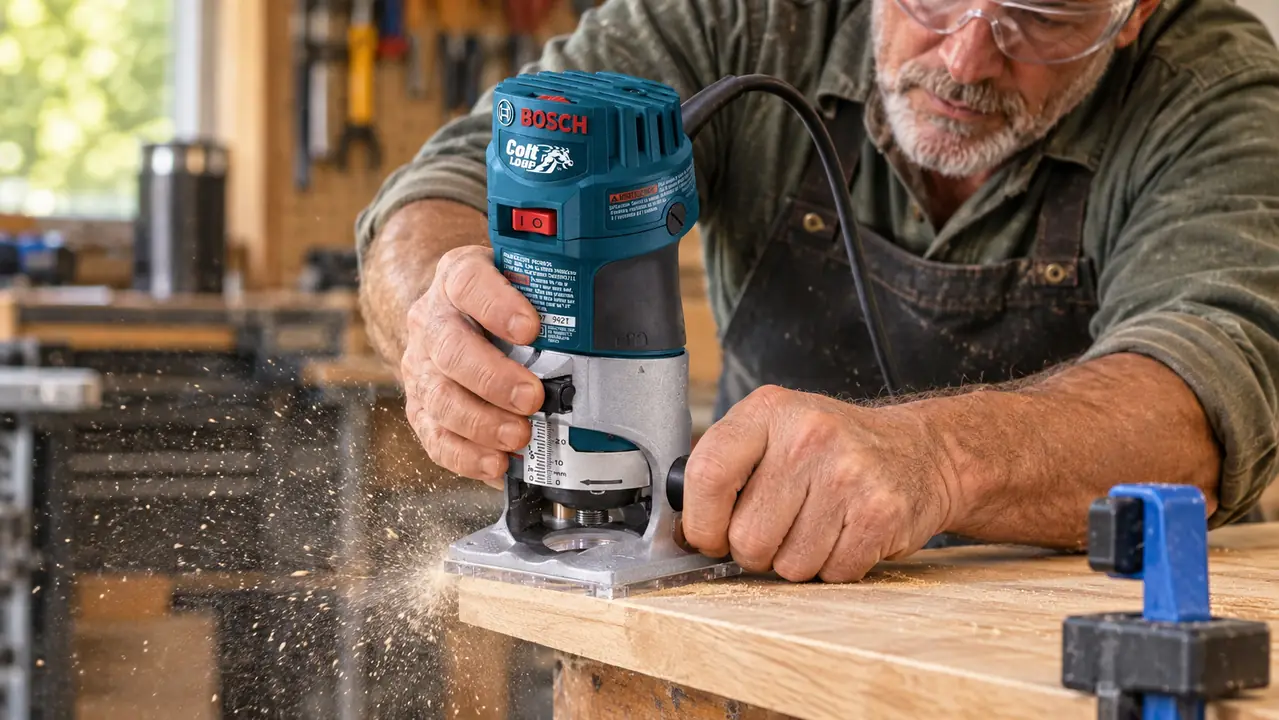
Weight is the first thing you notice, and in a small shop weight is not a small thing. The Colt comes in at 3.3 pounds, and it is narrow enough that I can run it along a clamped board with my left hand on the router body and my right hand feeding the stock past the bit. That sounds like a minor convenience until you have spent an afternoon holding a heavier router out at arm's length over the side of a bookshelf. The 1.0 HP, 5.6 amp motor is not a monster and is not supposed to be. For a 1/4 in. roundover or a shallow hinge mortise in a cabinet door, it never feels short, and it never tries to walk away from me either.
The bit changes are the part I would miss most if I switched. The Colt uses a self-releasing collet chuck, so when you crack the nut loose the bit comes free instead of staying stuck in the taper while you tap at it with a scrap of wood and say words your grandson should not repeat. I change bits a dozen times on a Saturday, and that one detail saves me more grief than any number on the box. The quick-clamp system matters for the same reason. The motor clamps into the base with a lever, so pulling it out to set depth or swap a bit is a two-second job rather than a wrestling match, and setting depth becomes something you actually do instead of something you put off.
The rest of the Colt's case is quieter but real. The variable speed dial runs from 16,000 to 35,000 rpm, and that top end is where small diameter bits want to live, especially the 1/8 in. bits I use for inlay and for cleaning up corners on toy parts. It ships with a fixed base and a straight edge guide that will lead the router along a workpiece or hold it up to 3-5/8 in. from the edge, which covers most of what a hobby shop does with a guide. The fixed base accepts bits up to 1-5/16 in. across. And it stores in about the space of a lunch box, which in a garage where the table saw, the bench, and the wood stove are already arguing over floor space is its own kind of feature.
Where Makita Wins
Then there is the Makita, and the Makita is simply a stronger tool. The 1.25 HP, 6.5 amp motor has more in reserve, and the electronic speed control holds the rpm you set when the bit loads up. That difference shows up the moment you get into hardwood. I cut a 3/8 in. deep groove in hard maple with the Colt last winter and took it in three passes, because the motor was audibly laboring and I do not like to force a cut. The borrowed Makita took the same groove in two passes and did not sound like it was working nearly as hard. If you rout oak, maple, or ash with any regularity, that headroom is worth more than a few ounces.
The housing is the other honest point in the Makita's favor. The Colt's body is plastic, and mine has survived years of shop life without a complaint, but aluminum shrugs off heat and the occasional bump against a bench dog in a way plastic does not. If you run a router hard for an hour on a set of shelf sides, that matters. So does the accessory line. The same Makita motor drops into a plunge base sold separately, so one purchase can cover freehand trimming and stopped cuts, like a mortise for a door strike, if you are willing to buy the second base.
The low end of the speed range deserves a mention too. The Makita dials down to 10,000 rpm, which is where you want to be with a larger bit, or when you are cutting plastic and would rather not melt the edge and spend twenty minutes cleaning up a smear. The Colt's floor is 16,000 rpm. That is fine for trim work and not fine for everything. None of this makes the Makita a better bench companion, mind you. It is heavier, the base is bulkier, and for a ten-second trim cut on an edge band I still reach for the Colt without thinking about it.
The Colt clamps into its base with a lever and lets go of the bit when I loosen the nut. Those two habits are why it sits on the bench and the heavier router lives in a drawer.
The Router I Reach For Nine Times Out Of Ten
If your work is trim, roundovers, small mortises and pattern cuts in a one-car garage shop, the Bosch Colt PR20EVS is the one that earns its shelf space. It weighs 3.3 pounds, its fixed base takes bits up to 1-5/16 in. across, and it lets go of a bit without a fight. Check today's price and what comes in the box on Amazon.
Amazon Check Today's Price on Amazon →What the Spec Sheet Leaves Out
Two things neither manufacturer prints on the box. The first is that both of these routers take 1/4 in. shank bits, full stop. If you already own a set of 1/2 in. shank bits from a full size router in the corner, neither machine will run them, and that is the most common disappointment I see from people buying a first palm router. The second is dust. Neither router collects it. Tape the shop vac hose near the base or plan on sweeping the bench between passes, because a shallow cut with a sharp bit throws more chips than you expect and they find their way into the coffee cup every time.
The other thing worth knowing is that neither router is a finish machine straight out of the box. Base flatness and collet runout vary a little from unit to unit at this level, so check yours with a straightedge and a test cut on scrap before you trust it on a visible edge. I learned that the slow way on a set of shelf sides that came out a few thousandths shy on one end, which is not a thing you notice until the shelf rocks. Test on scrap, adjust, then commit to the good stock. It costs ten minutes and saves a board.
Bits, Bases And Everyday Setup
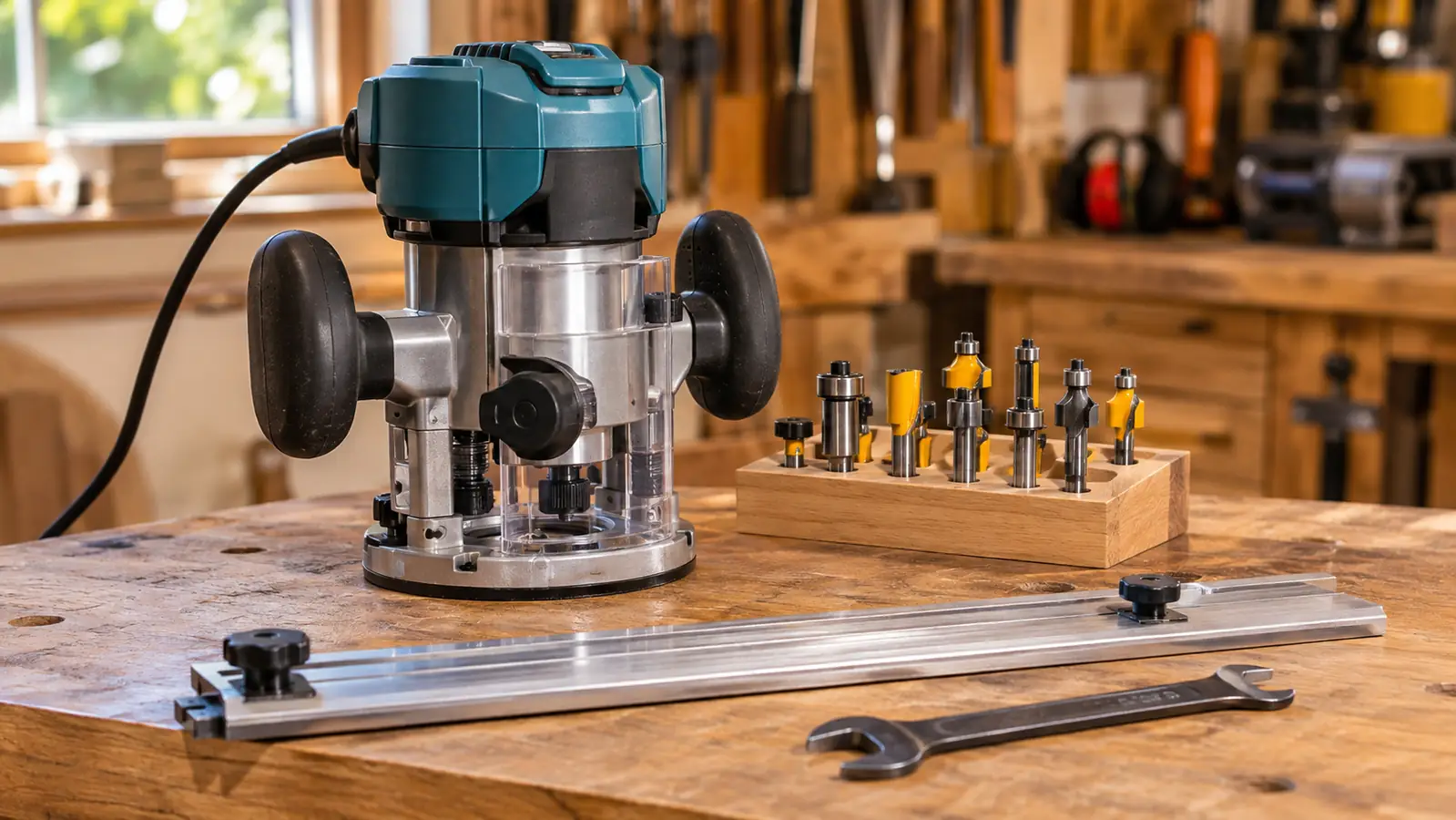
Whichever one you buy, the setup habits are the same. Unplug the router before every bit change, every time, no exceptions, even for a thirty-second swap. Seat the bit so a little less than the full shank is buried, tighten the collet properly, and keep the collet and the taper clean with a brush, because dust in there is what makes a bit creep and a cut go shallow halfway down a board. Keep the base plate slick with a touch of paste wax and it will glide along a straightedge instead of stuttering and burning the edge. Wear safety glasses, and put hearing protection on before you spin a 1/4 in. bit at 30,000 rpm, because that whine does not feel loud until the ringing starts at bedtime.
For setups, I clamp the work, then set the guide, then set depth, in that order, and I keep a test piece of the same thickness on the bench. On the Colt the depth change is a matter of releasing the quick-clamp lever and sliding the motor, which is fast enough that I will actually creep up on a depth in small steps. On the Makita the same job means loosening the base and resetting it, which is still quick but not something I do mid-cut for fun. If you buy the Makita and add the plunge base later, set your stop before the first cut, not after, because the first plunge is always deeper than the dial suggests.
Who Should Buy Which
Buy the Bosch Colt if you work in a garage or a spare room, if you trim laminate or edge banding, if you cut hinge mortises in cabinet doors, or if you want a router you can pick up with one hand and set down without thinking about it. It is also the one I would hand a beginner. 1.0 HP is enough to learn on and not so much that a mistake happens faster than you can react. There is a longer look at how the Colt holds up over a couple of seasons in the long term review on this site, and if space is your main constraint, the piece on fitting a palm router into a small workshop covers the storage side of that argument.
Buy the Makita RT0701C if you regularly take deep cuts in hardwood, if you want one motor that can serve as a trim router and, with the separate plunge base, a small plunge router, or if you work in a cold shop where a plastic body gets slick in a hurry. It is also the better choice if you plan to own exactly one router and you want the one with more headroom. Go in knowing it is heavier, that the base is bulkier in tight corners, and that the plunge base is a second purchase rather than something in the box.
And if you are buying for a kid or a grandkid who wants to help, buy the lighter one and make them wear the glasses and the muffs. Tyler stands at the other end of the bench with his hands behind his back while the router runs, and that rule came from the Colt being easy enough to control that I could concentrate on him instead of fighting the tool. A router that lets you keep your eyes on the person beside you is worth more than a quarter horsepower.
Start With The One You Will Actually Pick Up
A router that lives in a drawer is money you will never get back in useful work. For most home shops the Bosch Colt PR20EVS is the one that gets picked up, because it is light, it changes bits cleanly, and it fits a shop where every tool has to earn its footprint. Check today's price on Amazon and see what ships with it.
Amazon See the Bosch Colt PR20EVS on Amazon →