

Short answer first. If your shop is a one-car garage and most of what you do is knocking down glue lines, flushing end grain, and cleaning up router chatter before finish, buy the DEWALT DWE6421K. It is a 3.0 amp, 12,000 OPM random orbital sander that removes material faster than a hobbyist expects, and the body is short enough that your hand stays close to the panel. If you sand veneer, thin stock, or anything where one careless pass goes through the face, buy the Bosch ROS20VSC and use the speed dial. That is the honest split. The rest of this explains how I got there.
I own the DEWALT. A neighbor lent me his Bosch for three weeks while he was in Florida, and I ran both sanders on the same cherry blanket chest, a pair of red oak end tables, and about forty linear feet of poplar trim for a bookshelf. Same bench, same light, same dust collector, same stack of 5-inch discs. One 12 by 20 garage shop with a wood stove in the corner and not enough wall space. The differences that showed up were not the ones the spec sheets argue about.
DEWALT DWE6421K vs Bosch ROS20VSC at a Glance
| DEWALT DWE6421K | Bosch ROS20VSC | |
|---|---|---|
| Stock removal | 3.0 amp motor at 12,000 OPM, three passes on a hard maple glue line | Needed a few more passes at full speed on the same glue line |
| Speed control | Single speed, on or off | Variable dial, backs the orbit down for veneer and finish coats |
| Dust collection | One-handed locking dust bag, empties straight into the trash barrel | Filtered canister, holds more between empties |
| Switch protection | Dust-sealed switch | No dust sealing called out in the listing |
| Warranty | 3 year limited | One year, limited |
| Paper | 5 inch discs | 5 inch discs |
| In the box | Sander, dust bag, carrying bag | Sander, canister, case |
| Best for | Stock removal, trim, painted work, one-tool shops | Finish sanding, veneer, restoration |
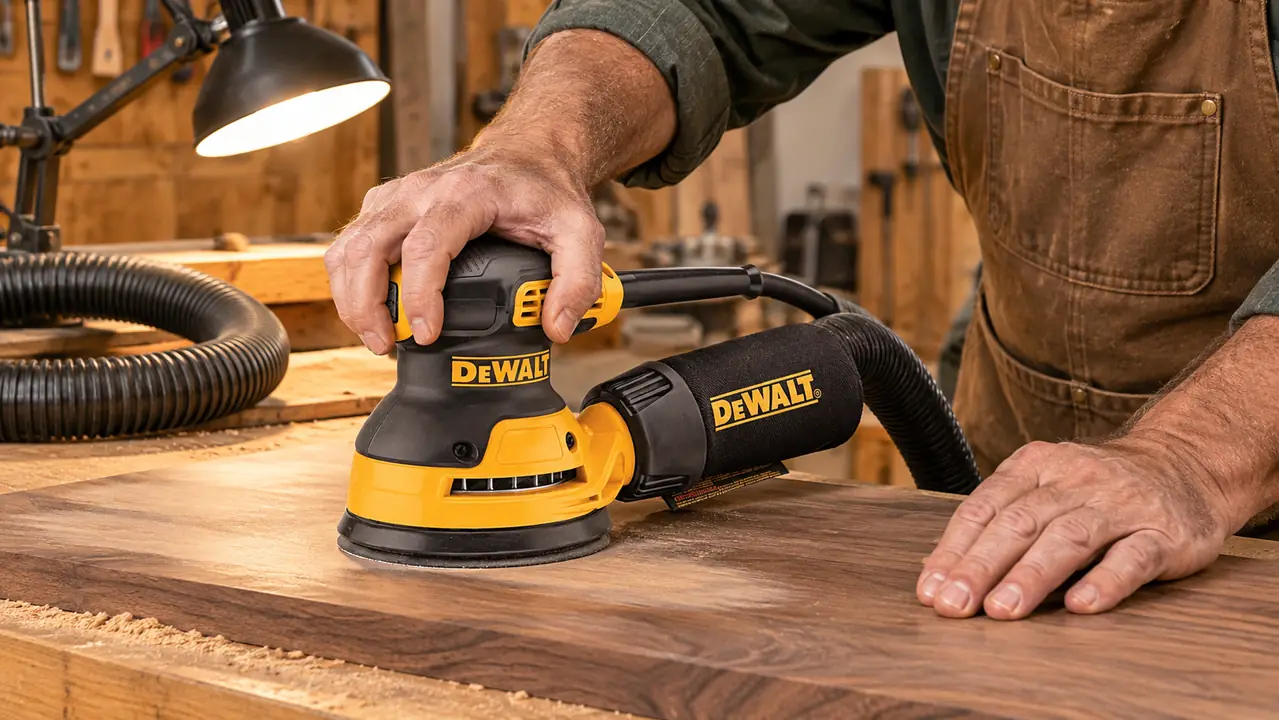
Where the DEWALT DWE6421K Wins
The 3.0 amp motor at 12,000 OPM is the whole argument. On a glue line in hard maple I marked the spot with a pencil and counted passes: three with the DEWALT, five with the Bosch running wide open, and I checked the same spot with the same straightedge both times. For a hobbyist flattening a glued-up cutting board at nine at night, that difference is the reason the DEWALT stays plugged in on my bench. It is also a single speed. There is no dial to think about and no setting to second guess. You pick it up, you sand, you set it down.
The second thing is the height. The listing puts the body at 6.24 inches tall, which sounds like a number until you spend an hour leaning over a bench. Your palm sits close to the work instead of perched on top of it, and I can keep the pad flat on a panel instead of rocking the machine up on one edge and gouging a corner. The rubber over-mold in the grip areas and the separate counterweight both help on long sessions. My hands are sixty-six years old and they let me know when a tool buzzes too much. This one I can run for a half hour without thinking about my wrists.
Two smaller items go in this column. The dust bag locks with one hand, so I can pull it off over the trash barrel without setting the sander down or hunting for a clip that has gone missing under the bench. And the warranty runs three years limited. A tool that lives in a garage and gets set down on a concrete floor will get dropped eventually. I would rather have the coverage and not need it than the other way around.
Where the Bosch ROS20VSC Wins
The speed dial is the reason to own the Bosch. On a veneered panel, or on a drawer front where you are one careless pass from sanding through the face, turning the orbit down and slowing your hand lets you take the finish off without digging in. I used it on a set of thin poplar panels and on a shellac repair for a neighbor, and it behaved. With the DEWALT I manage the same work by lifting off, keeping the sander moving, and starting a grit finer than I would like. That works. It is not the same as having a dial.
Dust collection is the other place the Bosch pulls ahead. The canister and filter hold more between empties than the DEWALT bag, and the fines that get through are smaller. In February, with the wood stove going and the overhead door shut, that matters to me. I still wear a mask, and anybody sanding in a garage with the door down should. But the air was clearer with the Bosch hooked up and the bench needed less blowing off between coats.
Ergonomics come down to hand size, so I will not pretend my opinion settles it for you. The Bosch grip suits a lot of people and balances well with a hose hanging off the back. What I noticed is that after forty minutes of overhead work on the underside of a table apron, my wrist was happier with the DEWALT. Your hand may disagree. If you can borrow either one for a weekend before you decide, do that.
Three passes on hard maple with the DEWALT, five with the Bosch wide open, and the same straightedge told the story both times.
The one that stays plugged in on my bench
3.0 amp, 12,000 OPM, a dust bag that locks one-handed, and a three year limited warranty. This is the sander I reach for when there is material to remove and the evening is already half gone.
Amazon Check Today's Price on Amazon →What the Amps and the Orbit Speed Actually Mean
Three amps does not sound like much next to a circular saw, and it is not. What matters on a sander is the combination of motor and orbit speed, and here you get 12,000 OPM from a 3.0 amp motor. In practice that means the pad holds its speed when you lean on it. A weaker sander bogs, the orbit slows, and you compensate by pushing harder, which is exactly the wrong move. If you have ever sanded with a tired quarter-sheet sander you know the sound: the motor drops a note and the paper stops cutting. The DEWALT did not do that on anything I put under it, including an oak tabletop that had been sitting in a barn for eleven years.
12,000 OPM is fast enough that you should never sit still in one spot. Keep the machine moving, overlap your passes by half the pad, and let the weight of the tool do the work. Two hands is fine, one hand is faster, and the pad does not care which you use as long as it stays flat. The swirl marks people complain about usually come from a loaded disc, a grit jump of more than one step, or a sander tipped up on its edge at the end of a stroke. None of that is the tool's fault.
The dial on the Bosch changes that conversation. When you slow the orbit, you can leave the sander in one place a beat longer without the paper climbing through the finish. That is what you want on a coat of shellac or a veneered panel. What you do not want is to slow a sander down and then push on it, which a lot of people do. Slow means slower, not stronger. The Bosch rewards a light hand and punishes impatience, same as any sander ever made.
One more word on paper, because paper is half of what the sander does. Both machines take 5-inch discs, the size sold in every hardware store and every home center, in every grit from 40 to 400. I buy them in boxes of fifty. If you are new to this, get 80, 120, 150 and 220 and stop there. A stack of discs and a pencil to mark your progress will do more for your results than any difference between these two tools.
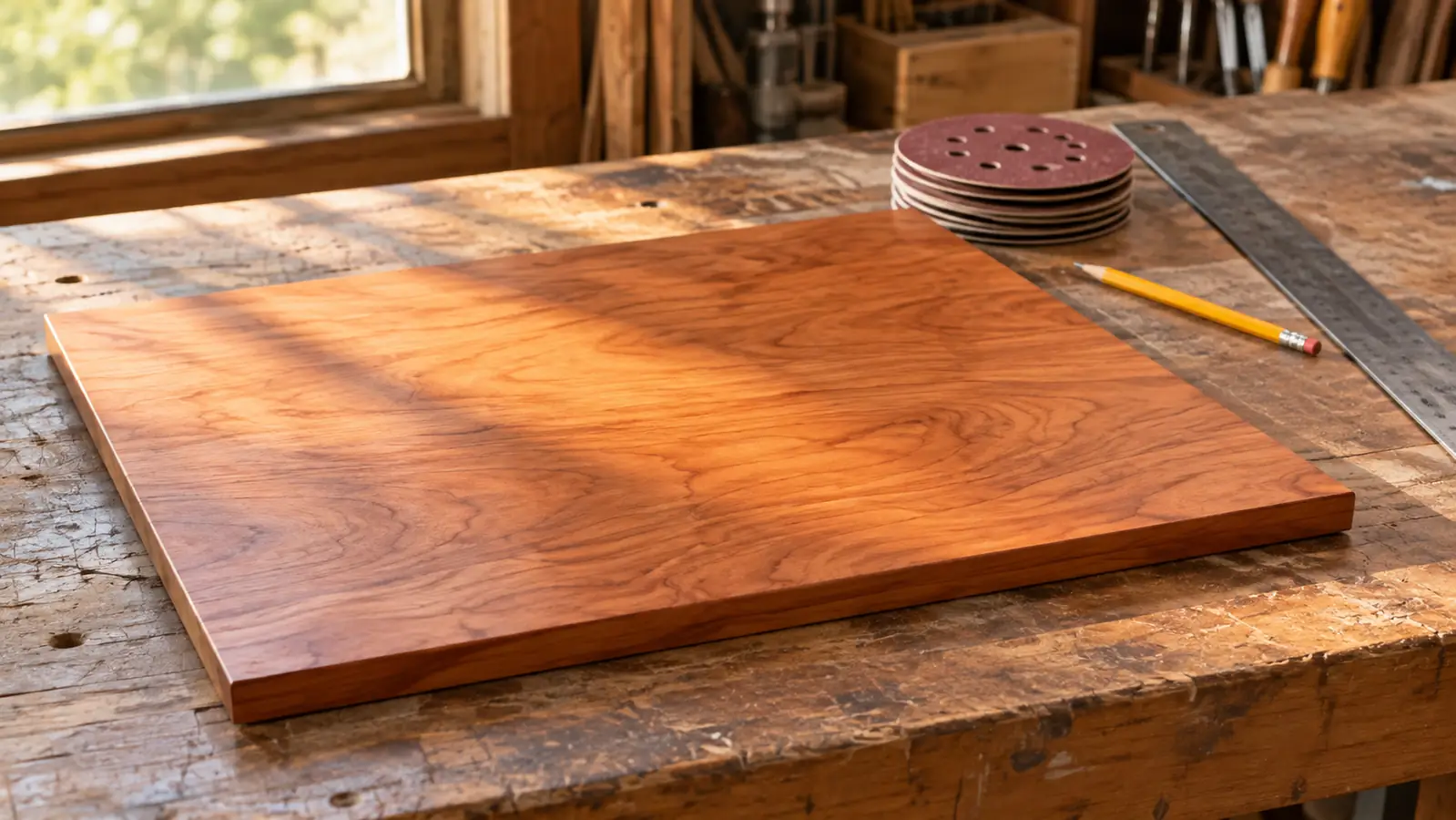
Living With Two Sanders in a 12 by 20 Shop
The DEWALT measures 10.08 inches long, 7.23 inches wide, and 6.24 inches tall, and the kit comes with a carrying bag that I do not use for carrying. The bag is where the sander lives, on a shelf under the bench, and it keeps the dust off it between jobs. In a shop where the bench is also the outfeed table for a table saw, a tool that has a home is a tool that gets used. The rest of the time it sits next to a biscuit joiner I keep meaning to sell.
Twelve by twenty feet is not a lot of floor, and both sanders are one-hand tools, so neither one eats a footprint the way a planer does. The difference shows up in the cord. A corded sander means dragging a cord around the bench and stepping over it, and both of these are corded. I run mine off a reel over the bench and keep the loop short. If you are working on a piece in the driveway in July, that cord is your tether.
Winter is the real test. With the wood stove going, the door shut, and a project due for a grandson's birthday, you notice dust. The DEWALT bag fills faster and needs emptying more often, maybe twice on a tabletop. The Bosch canister lasts longer. Neither one replaces a mask and a shop vac running in the background. I have a portable dust collector that I wheel next to the bench for sanding sessions, and I would not sand indoors without it.
I also learned to check the pad before a finish sanding pass. A disc that has been used on paint or on pressure-treated stock is not a disc you want on bare cherry. I keep a marker on the shelf and write the grit and the job on the back of the disc. That is not a tool feature. It is a habit, and it has saved more finishes than a dial ever did.
What I Got Wrong With Both of Them
For the first ten years I sanded like I was trying to erase the board. Both hands, all my weight, and a sander screaming the whole time. That is how you burn through a veneer, dish out a panel, and wear out a pad. The tool only needs to be guided. If the machine is bouncing, you are pushing. If the paper loads up in thirty seconds, you are pushing. Almost every sanding problem I have had in this shop was me.
The other mistake was moving too fast across the work. I used to sweep a panel in ten seconds and wonder why the surface looked uneven in raking light. Now I go slower than feels natural, about an inch a second, and I overlap. It takes longer and the finish shows it. I also stopped jumping grits. Going from 80 straight to 220 leaves scratches that only show up after the first coat of finish, which is the worst possible time to find them.
The last one is dust. I used to let the bag get full because emptying it is a chore and I was in a hurry. A full bag stops collecting, the dust goes into the air, and the fines settle on everything, including the wet finish on the piece you just sanded. Now I empty it when it looks half full, which on a tabletop is twice. The one-handed latch on the DEWALT makes that easier. I still manage to forget.
Who Should Buy Which
Buy the DEWALT if you own one sander and need it to do everything. Trimming out a room, cleaning up a repair, flattening a glued panel, sanding the fuzz off a painted shelf. It is direct, it is quick, and the 3.0 amp motor does not slow down on hardwood. The single speed is not a limitation for that work. It is one less thing to think about when you have a hundred board feet of trim on sawhorses and a family dinner at six.
Buy the Bosch if sanding is the part of the project you care about, or if the pieces you build have veneer, thin stock, or a finish that has to come off a millimeter at a time. The dial is the whole reason. If I sanded between coats more than a few times a year, or if I did restoration work for other people, I would own the Bosch and live with the extra fuss at the canister. As it stands, I build solid wood furniture and I remove material more than I finesse it. That is why the DEWALT stays on my shelf.
One sander, one bench, no second thoughts
If the shop is a garage and the work is real, the DWE6421K takes off stock and gets you to finish. The kit includes the dust bag and a carrying bag, and the warranty runs three years limited.
Amazon Check Today's Price on Amazon →