
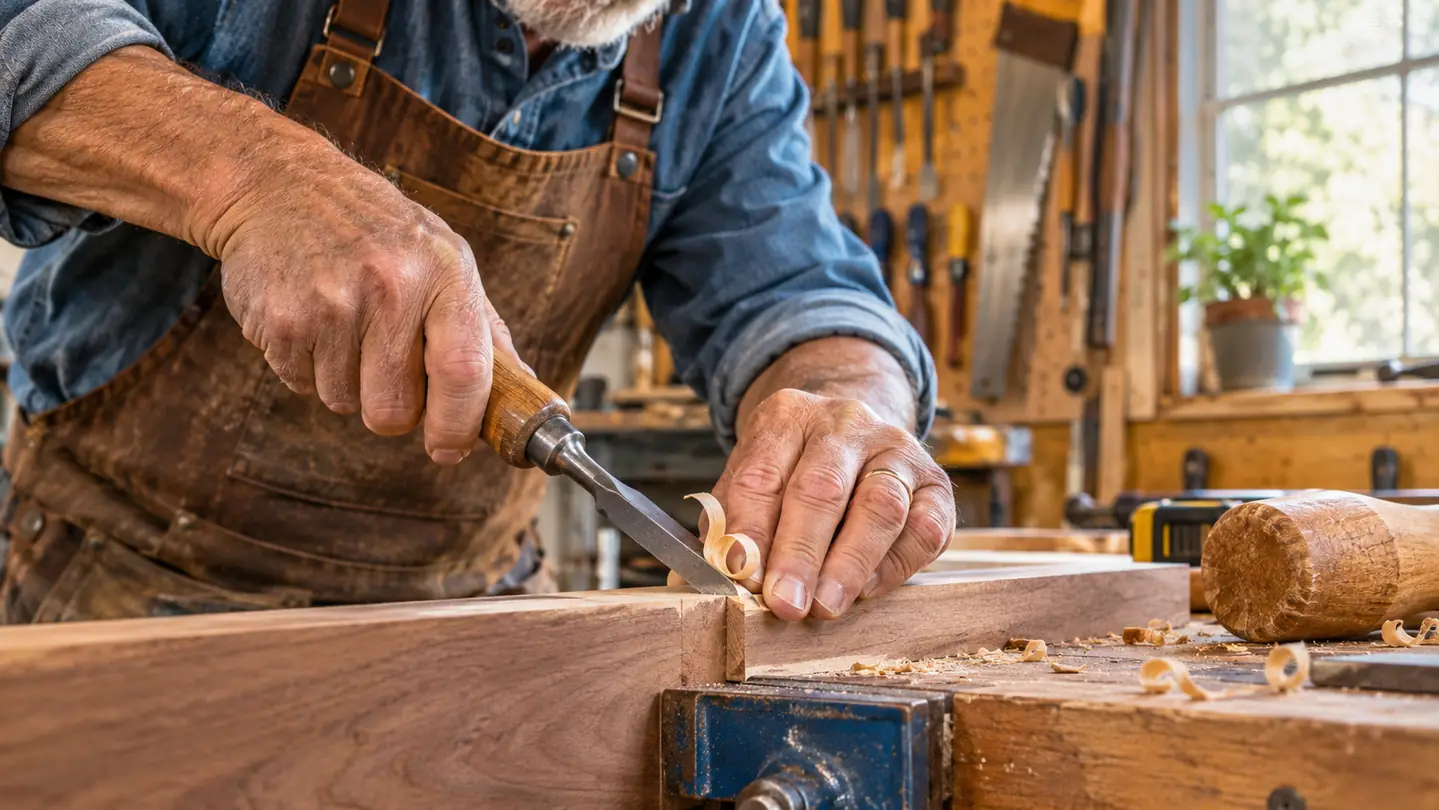
The end table was finished except for the part nobody sees until they run a finger along it. The shoulder line on the apron wandered about a sixteenth of an inch, and the machine marks from the router bit sat there like a bad haircut. I stood in the garage holding a sanding block, which is what a man does when he does not want to admit he needs a sharper tool.
I owned chisels. That was the aggravating part. A four piece set from my first year in this shop, the kind that comes in a blister pack and feels fine in the store. By the time I needed one for a real paring cut, the edge was gone and the backs were nowhere near flat. I spent more time at the sharpening stone than at the bench, and I was not experienced enough to know whether the problem was the tool or my hands.
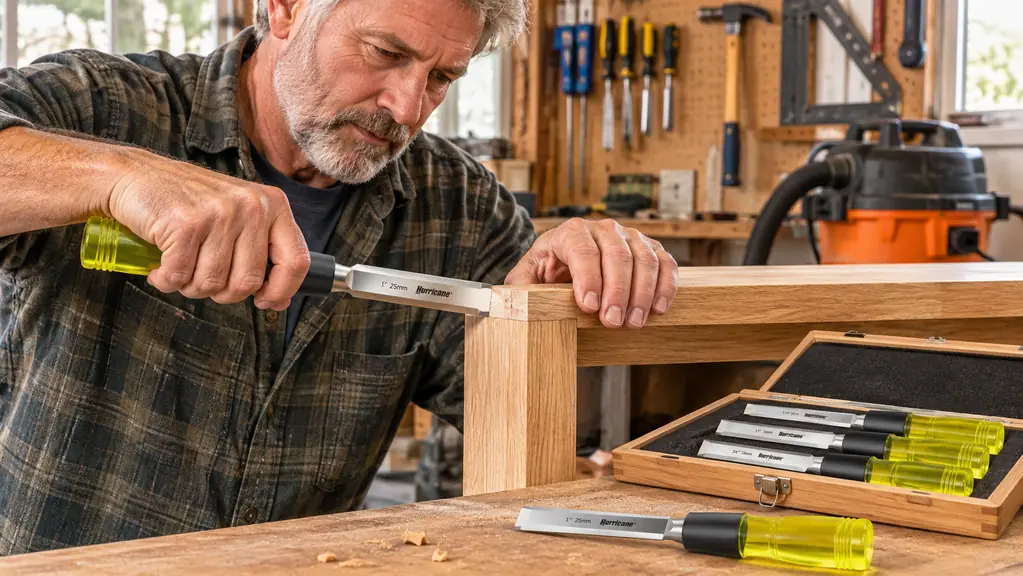
So on a Tuesday night I ordered the HURRICANE 4 Piece Wood Chisel Set for Woodworking. A quarter inch, a half inch, three quarters, and one inch, which covers nearly everything I do in a twelve by twenty garage. Drop forged chromium vanadium steel, heat treated edges, a twenty five degree bevel, PVC handles, blade guards on all four, and a case. That is the entire description. Nothing to decode.
The set arrived at the end of that week. First thing I did was check the backs on a diamond plate. Two of the four were close to flat right out of the package. The other two took a few minutes of work. That is not a knock. I have never opened a chisel that was ready to go straight from the box, and I have opened a few.
The first real job was cleaning up those shoulders. The half inch HURRICANE chisel pared the end grain on the apron clean in two passes, and I could feel the bevel register flat against the wood instead of skating across it. Every woodworker knows that in his head long before he feels it in his hands. A sharp edge cuts where you point it. A dull one goes wherever it wants.
A sharp edge cuts where you point it. A dull one goes wherever it wants. Half of what I blamed on my hands was really the tool.
Here is the honest part. These are not a lifetime tool. The steel is better than I expected, but a four piece set at this end of the market is not going to hold an edge the way a hand forged chisel will. I hone the half inch and the one inch for about a minute before each session. If you are the sort of woodworker who wants to pick a tool up off the rack and go, that ritual will wear thin.
What they do well is everything a home shop actually asks of a chisel. Cleaning out hinge mortises on a neighbor's cabinet door. Paring end grain on cutting boards so the glue line closes tight. Chopping the waste between pins on a small box. The sizes earn their place too. The quarter inch gets into the corners of the birdhouse openings I make with my grandson, and the one inch is what I grab when I am flattening the bottom of a stopped dado. Four blades, and each one has a job it does better than the others.
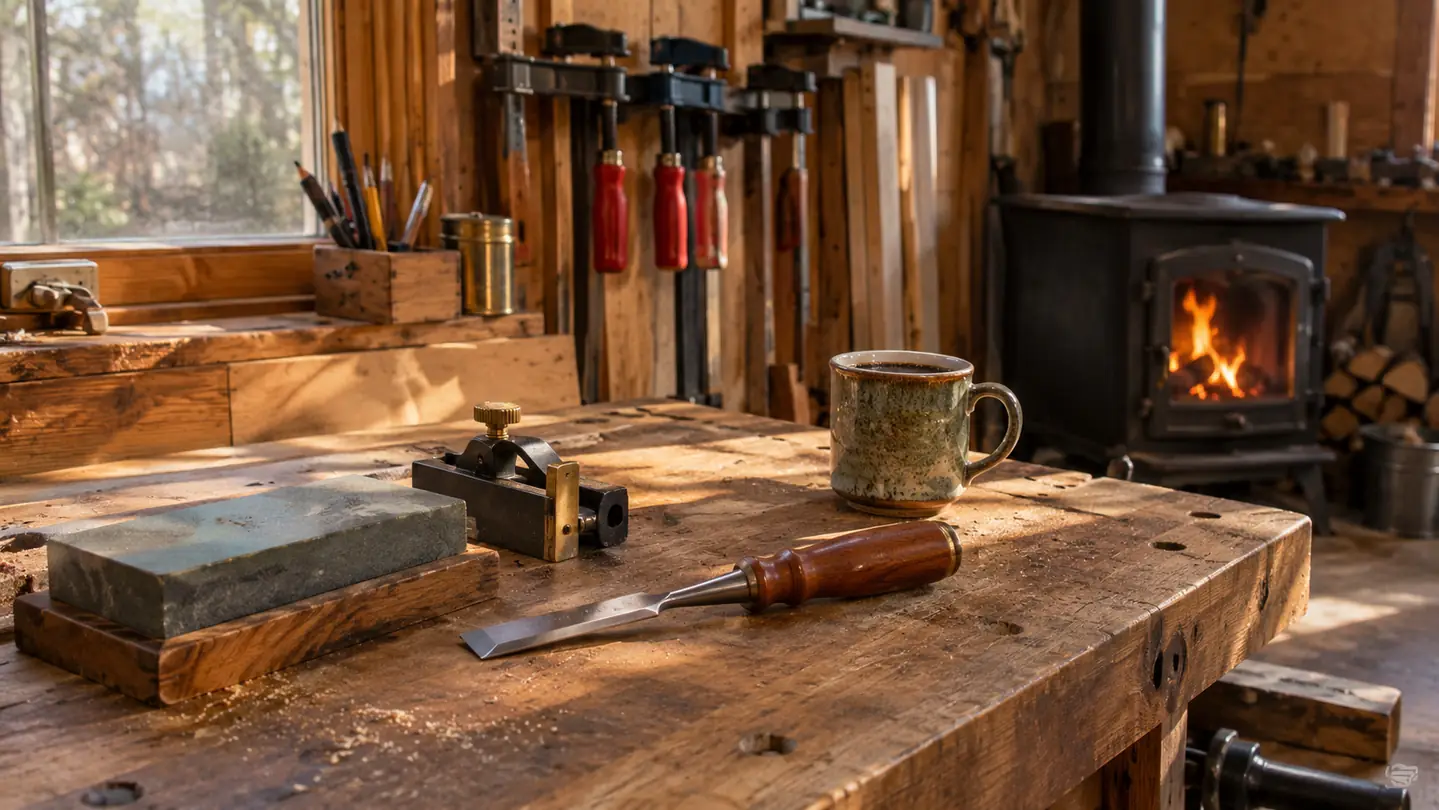
The twenty five degree bevel is the standard angle, which means every sharpening jig and every piece of advice you will find applies without translation. That sounds like a small thing. It is not, when you are learning. I clamped a honing guide on the one inch blade the first night and worked it on a water stone until it would shave the hair off my forearm, and that edge lasted a whole evening of paring pine for a set of shelves.
The PVC handles are comfortable enough for an hour of work and easy to wipe down when they get sticky with sawdust. The blade guards are the detail I did not expect to care about. Everything in this garage lives within arm's reach of everything else, and a bare edge sitting in a drawer is how a Saturday ends at urgent care. The case earns its keep too. It fits in a drawer under the bench, which in a shop this size is the whole point.
My grandson Tyler is twelve and helps me on weekends, mostly holding boards and asking whether we are done yet. He used the half inch to clean up the notch on a birdhouse wall last month, both hands on the handle and safety glasses on, and it cut where he aimed it. That is about the highest compliment a chisel can get from me.
The HURRICANE set has been on my bench for months now. Seven thousand reviews and a 4.7 average is what pushed me to try it, and after using it I understand why the rating holds. It is not a fancy tool. It is a tool that shows up, takes an edge, and lets me work on the wood instead of on the chisel. The one thing I would change is the honing ritual, and that is a fair trade at this price point for a man who works on weekends.
What I'd Tell You If We Were Sitting at My Kitchen Table
If you are starting out and staring at chisel sets that cost more than your table saw, I would tell you to buy the HURRICANE set and put the difference into a good sharpening stone and a honing guide. Learn to raise a burr on these blades and you will know how to do it on any blade you ever own. Outfit the bench with the money you save, not with the tool you are not ready for. Keep the guards on. Carol has heard me say it enough that she says it for me now. And when the edge goes soft halfway through a cut, stop and hone it. Fighting a dull chisel is how you split a board you already spent two evenings on. I have done that, and I would rather you did not.
The set I would hand a new woodworker tomorrow
Four sizes, one case, a guard on every blade, and steel that takes a working edge. Start here and spend the rest on the stone.
Amazon Check the HURRICANE chisel set on Amazon →