
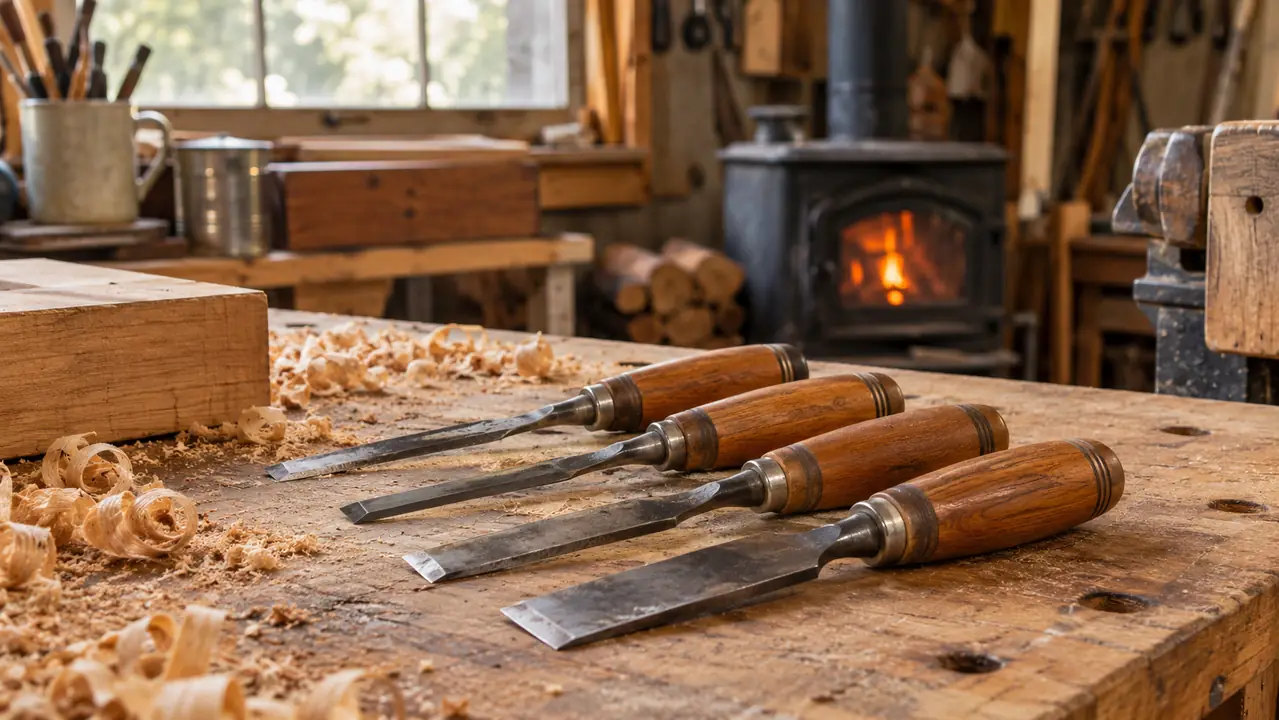
A dull chisel is more dangerous than a sharp one. That sounds backwards until the afternoon one skips off a knot, slides across the board, and opens the base of your thumb. I have the scar, and I have the memory of standing at the bench wondering why I had spent an hour fighting a tool that could not cut.
I bought the HURRICANE 4 Piece Wood Chisel Set about three years ago because I wanted a working set I could leave out on the bench without fussing over it. Four sizes, quarter inch through one inch, drop forged CR-V steel, a 25 degree bevel, PVC handles, blade guards, and a case. None of that is fancy. What I wanted to know was whether the edges would survive a Pennsylvania winter of cutting board glue-ups, hinge mortises, and the small end tables I build for neighbors.
The Quick Verdict
A working set that earns its shelf space in a small shop. The steel takes a fine edge and the guards keep it there, but you will sharpen more often than the fellow with the expensive set, and you will want a wider chisel eventually.
Amazon Check Today's Price →Four chisels that cut, guards that keep them cutting
Quarter inch through one inch, CR-V steel, blade guards and a case so nothing rolls around a drawer. Mine has lived on the shelf above the bench for three years.
Amazon Check Today's Price on Amazon →How I've Used It
My shop is a one-car detached garage, about twelve by twenty feet, with a wood stove in the corner for January and a shop vac plus a portable dust collector to keep the air breathable. There is no room for a second bench. Whatever hangs on the pegboard or sits on that shelf has to earn it, and I have given away tools that did not. The HURRICANE set has stayed, in its case, three feet from where I stand to work.
Most of what I build is small. Cutting boards, end tables, bookshelves, a cherry blanket chest I am still proud of, birdhouses and toys for my grandson Tyler, and a steady trickle of repair jobs for neighbors. Chisels turn up everywhere in that kind of work. Cleaning up a dado. Paring a hinge mortise. Chamfering an edge so it does not feel sharp in the hand. Hogging out the waste between two saw cuts so the router does not have to.
The quarter inch gets the most use by far. It is the one I reach for to clean out a corner or trim a plug flush. The half inch is the all-rounder and probably the one you will dull first. The three quarter and the one inch come out for paring wide surfaces and for the heavier cleanup after routing, and they are the two that show the least wear after three years, simply because they work less.
The job that convinced me these were staying happened two Februaries ago, on a maple end table for my daughter Jen. I had four mortises to cut for the aprons and no mortise machine, so it was drill out the waste, then square the corners with the half inch, then pare the walls with the three quarter. That is roughly two hours of chisel work in one sitting, on hardwood, in a garage cold enough that I was running the stove and still wearing two layers. By the last mortise I was honing every ten minutes or so instead of every twenty, and I felt it. But the corners came out square and the aprons fit without me reaching for filler, and I have cut every mortise since the same way.
I do not baby them and I do not abuse them. They get wiped with an oiled rag at the end of a project, they go back in the guards, and they go back in the case. That routine is the whole reason they still look and cut the way they do.
What the CR-V Steel Actually Does
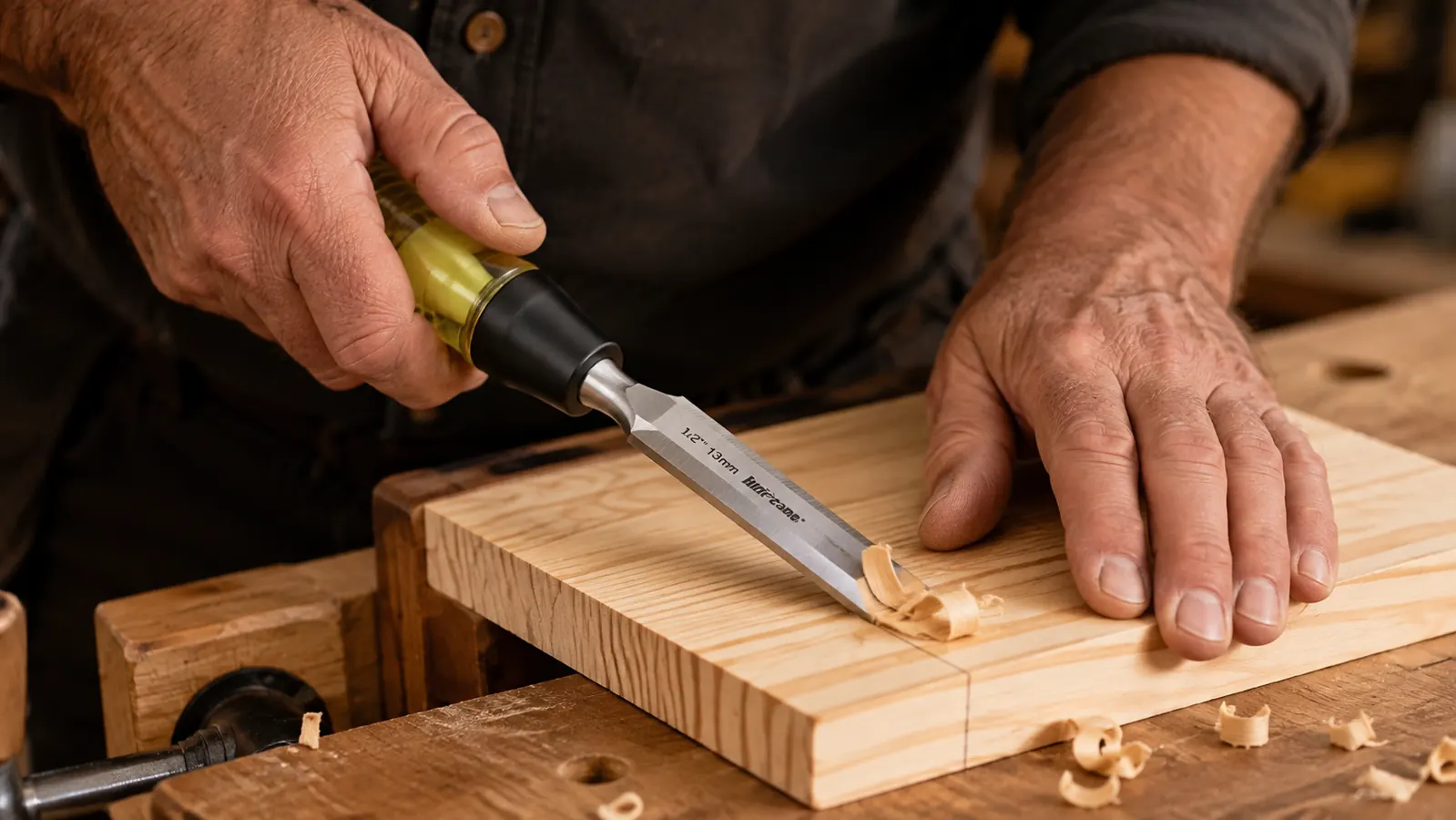
Chromium-vanadium steel is a workhorse alloy, not a prestige one. The listing says drop forged with heat-treated edges, and whatever the factory does to them, the result is a blade that takes a clean edge on a water stone and holds it through a reasonable amount of paring. On pine, poplar, and mahogany it behaved the way I wanted it to. On hard maple it dulled faster. I noticed, and I noticed it as an inconvenience rather than a failure.
Here is the fair comparison. A friend of mine owns a premium chisel, the sort where one tool costs more than this whole set, and the difference is real. His edge lasts longer. His back came flat from the factory. The balance in the hand is better and I will not pretend otherwise. But that difference shows up over an afternoon of chopping, not over ten minutes of paring, and most home woodworkers use a chisel in short bursts between other operations.
The first thing I do with any new chisel is check the back. On the HURRICANE set, two of the four were close to flat out of the case. The one inch took a stretch on the stone before the whole face cleaned up and stopped rocking. That is normal at this level and it is not a defect, but it is an hour of your life you should plan for rather than discover on a Saturday morning when you wanted to be building.
I checked all four of those backs on a granite surfacing plate I keep under the bench with a sheet of 220 grit stuck to it, pencil scribbles across the face, and worked until the marks came off evenly. The quarter and the half cleaned up in about fifteen minutes each. The three quarter took closer to twenty five. The one inch took two sessions on separate evenings because I got impatient and started pressing too hard, which is how you dish a back and make more work for yourself. That was my mistake, not the tool's, and it is the same mistake I made on the first plane iron I ever flattened.
Three years in, none of the four HURRICANE chisels has chipped badly enough to need regrinding, and none has developed a crack at the bolster. That is the part I watch for on inexpensive chisels, because a handle that lets go under hand pressure is how people get hurt.
The 25 Degree Bevel and What It Means at the Bench
Twenty-five degrees is a paring angle. It is sharp, it slices end grain cleanly, and it will not survive being used as a lever. That is the trade, and for furniture work it is a good trade. If you are cutting a hinge mortise in softwood or paring a plug flush, the factory bevel is exactly right and you should leave it alone.
I changed mine on the two larger chisels. Not because the factory angle was wrong, but because I chop a fair amount when I cut mortises, and a 25 degree edge on a one inch chisel will fold if you lean on it. I honed the three quarter and the one inch to roughly 30 degrees and kept the two small ones at 25. If all you do is pare, do nothing. If you chop, plan on twenty minutes at the stone making that decision yours.
That is a general woodworking truth rather than a knock on this set. Every chisel at every level needs its edge tuned to the work you actually do. The difference is that an expensive chisel arrives closer to ready and you have less tuning to do before the first cut.
Handles, Guards, and the Case
The handles are PVC in what the listing calls the regular grip size. They are on the chunky side, which suits my hands, and the shape gives you something to push against when you are paring with two hands and your shoulder behind it. They get a little slick when the shop is warm and your palms are damp. A wipe with a rag fixes it, and so does a light scuff with sandpaper if it really bothers you.
The blade guards are the part I did not expect to care about and now would not give up. Four chisels rattling around in a drawer or a toolbox is how edges get chipped, and a chipped edge is an hour at the stone undoing a two second mistake. The guards go on and stay on. The case keeps the whole set in one place, which matters in a shop where everything has to have a home or it becomes clutter on the bench.
One complaint, and it is a small one. The case is a storage box, not a rack. I still pull the chisel I need out of it every single time. If you have pegboard space, hang them and keep the case for carrying tools to a job.
Sharpening Is the Real Work of Ownership
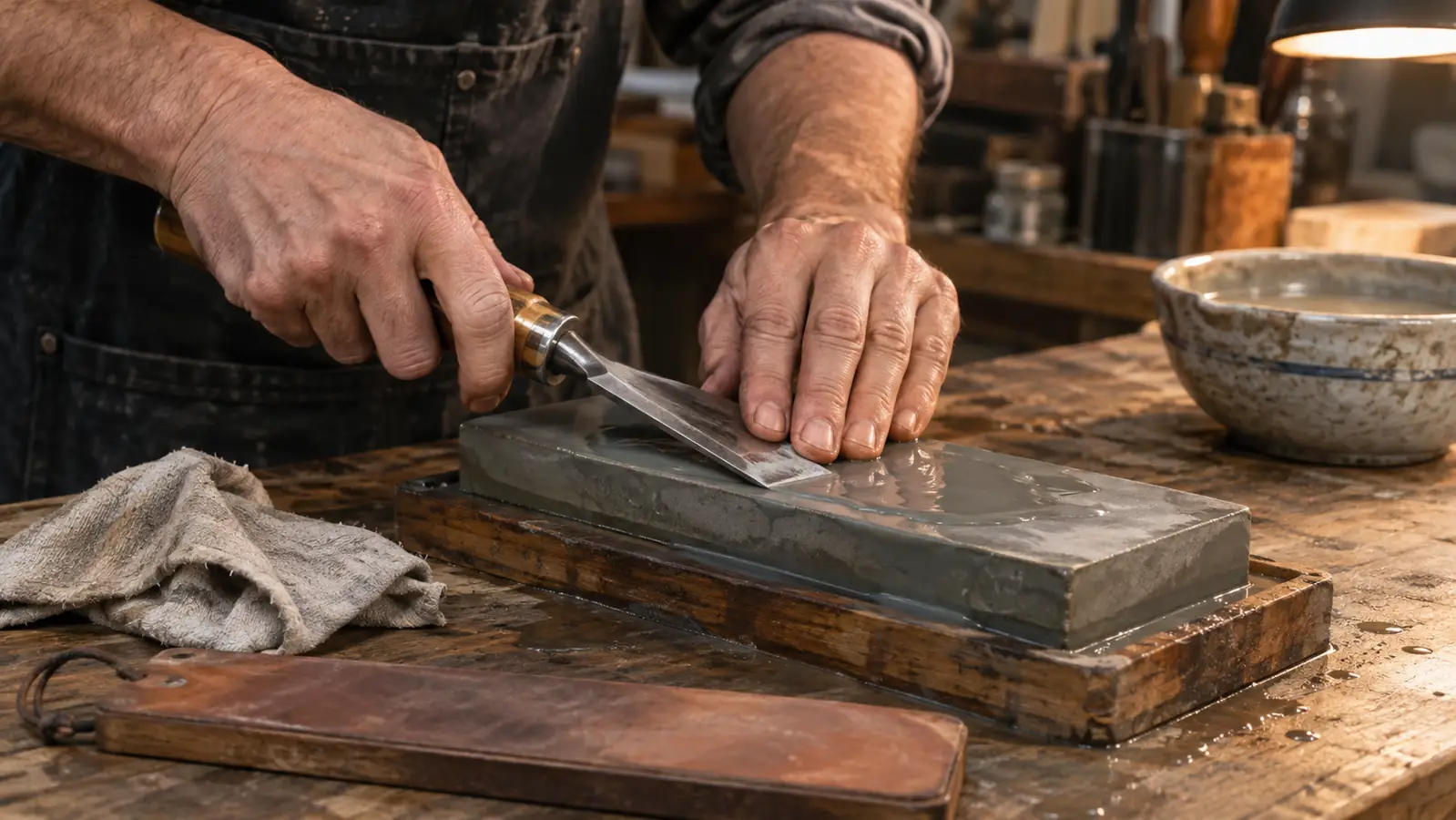
Nothing in this set stays sharp on its own. I hone the small ones on a water stone before most projects, and I touch up mid-project when I am working hardwood. A leather strop with compound handles the between-times work and honestly does more for my edges than anything else I own.
The good news is that chromium-vanadium sharpens easily. It is forgiving on the stone, it does not fight you, and you can bring an edge back in a couple of minutes once you have a routine. The bad news is that you will do it more often than the fellow with the expensive set. If you hate sharpening, this is the wrong purchase, and so is every other chisel.
Full disclosure on my own mistake. For the first year I honed freehand and told myself it was fine. It was not fine. My edges were crowned, the chisels cut like a wedge, and I blamed the steel for months. A cheap honing guide fixed it in one afternoon and made me feel foolish. The tool was never the problem.
I keep the routine small enough that I will actually do it. A 1000 grit stone, then an 8000, then four or five passes on the strop. No jig for the touch-ups once the bevel is set, because I got lazy about clamping the blade in the guide and eventually learned to hold the angle by feel. The whole thing runs about three minutes per chisel if the edge has not been damaged. I do it while the glue is drying on whatever else I am building, which is the only reason it gets done at all. If I waited until the end of a project to sharpen, I would be working with a dull chisel for the last hour of every project.
Where the Set Falls Short
The HURRICANE set has four sizes and it does not pretend to be a complete kit. There is no one and a quarter, no one and a half, no mortise chisel, no skew. For a blanket chest or an end table, four covers what I need. For anything with deeper joinery, you will buy a fifth chisel and then a sixth, and the set becomes the core you build around.
The steel is not in the same class as a premium tool and I have said so twice now, so I will only add this. If you cut dovetails for a living, you will feel the difference in your wrist by midafternoon. If you cut them on a Saturday, you probably will not.
The gap I hit hardest was width, not steel. Paring the full width of a one inch apron shoulder means working in passes with the one inch chisel, and on a wide rabbet I have caught myself wishing for the one and a half enough times that I finally wrote it on the shopping list. Four sizes will carry you a long way, and then one day they will not, and you will know exactly which chisel you are missing because you will have spent an hour wishing for it.
And the chunky handle is not for everyone. If your hands are small, hold one before you commit. That is true of any tool and it is the one thing about this set I cannot answer for you from my own bench.
What I Liked
- Four usable sizes, quarter inch through one inch, cover most home shop work
- Takes a clean edge on a water stone and sharpens easily
- Blade guards and a case keep the edges intact between projects
- PVC handles give you something solid to push against when paring
- The 25 degree bevel is right for paring and light chopping straight out of the case
Where It Falls Short
- Edges dull faster in hard maple than premium steel does
- Two of the four backs needed work on the stone before first use
- No one and a quarter, one and a half, or mortise chisel in the set
- Handles are chunky and get slick when your hands are damp
- The case is storage, not a bench rack
For the way most home woodworkers use a chisel, in short bursts between other operations, the gap between this set and a premium one is smaller than the marketing suggests.
Who This Is For
This set is for the home shop woodworker who needs four chisels that cut, keeps them within arm's reach, and does not want to think about them again until the next project. If you are building cutting boards, small tables, shelves, birdhouses, and the occasional repair for a neighbor, the sizes here will cover nearly everything you ask a chisel to do.
It is also a good set for someone newer to hand tools. The guards protect you from your own storage habits, the case keeps the set together, and the steel is forgiving enough that a beginner learning to sharpen on it will not ruin an expensive tool while learning the motion. Make your mistakes on these.
And it suits a small shop. Twelve by twenty feet means you cannot keep three sets of everything. One case on a shelf, four chisels in it, and the footprint problem is solved.
Who Should Skip It
Skip it if you cut joinery seriously and often. If dovetails, mortises, and fine paring are the main event rather than the cleanup, the extra edge retention of a premium chisel pays you back in saved sharpening time and cleaner cuts, and you will feel the difference inside a single project. Buy two good chisels instead of four adequate ones and add sizes as the work demands.
Skip it if you will not sharpen. No chisel in this price range or any other stays sharp on its own, and a dull chisel is not just slower, it is the tool that slips. If you know yourself well enough to know the stone will stay in the drawer, spend your money elsewhere and use a router bit instead.
And skip it if you need a one and a half inch chisel for the work in front of you right now. Buy the size you need, not the set that almost has it.
The set I hand a neighbor setting up a first shop
Quarter inch through one inch, CR-V steel, blade guards, and a case. Mine has been on the shelf above the bench for three years and it is not going anywhere.
Amazon Check Today's Price on Amazon →