
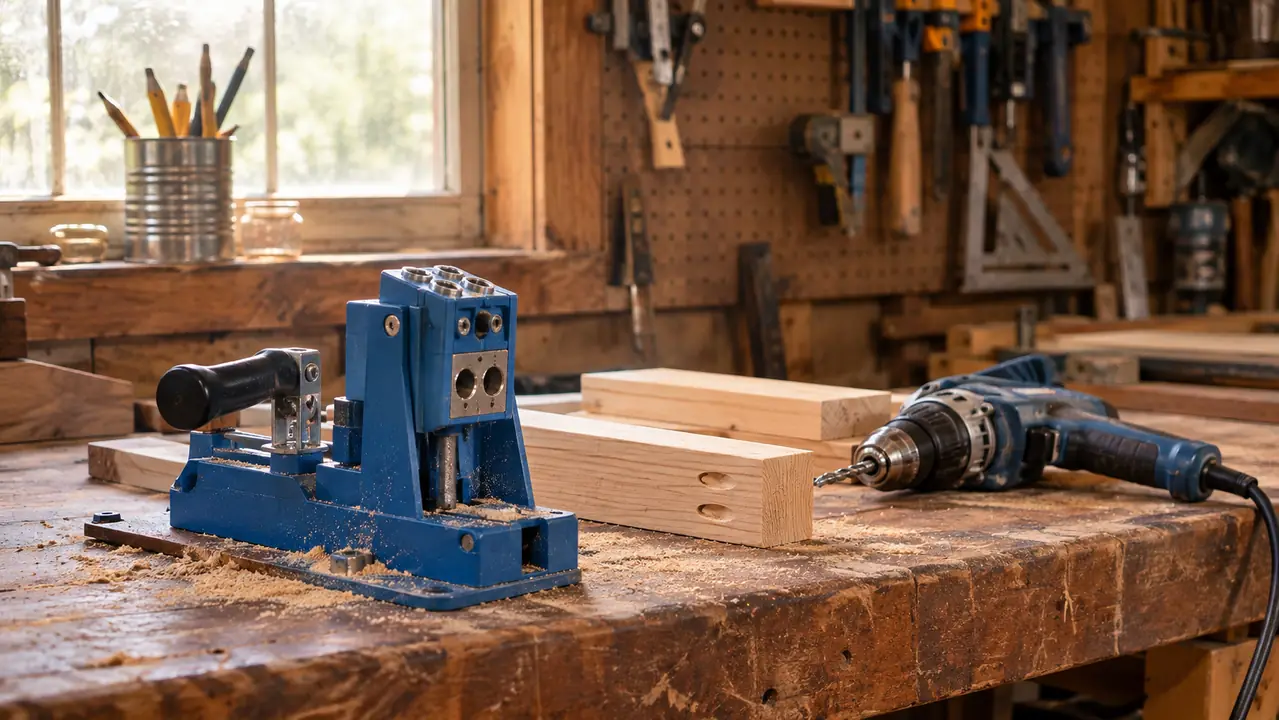
Nobody warns you that the Kreg R3 arrives looking like a plastic lunchbox. The compact carrying case measures eight inches long, two and a quarter wide, and five inches tall, and the whole kit weighs 1.3 pounds. I put mine on the kitchen scale the day it came in, because anything that lives in my shop has to justify the shelf space it takes, and my shop is a one-car detached garage that runs about 12 by 20 feet. That is not a lot of room for a tool that wants to be the center of attention.
I have been woodworking about 30 years, most of it in that same garage, and for a long stretch of it my answer to joining two boards was dowels, biscuits, or a lot of clamps and a good deal of hoping. The Kreg R3 is the first pocket hole jig I have owned that fits in a drawer and does not ask me to rebuild the bench around it. That is the short version. The longer version, including the parts that are not printed on the box, is the rest of this page.
The Quick Verdict
A small, honest jig that does one joint well and asks for almost nothing in return. Buy it if your shop is tight and your projects are furniture sized. Skip it if you are drilling hundreds of holes a week.
Amazon Check Today's Price →The pocket hole jig that fits in a drawer and still holds a joint
1.3 pounds, nine depth settings, and a case small enough to live on a shelf above the bench. This is the one pocket hole tool I have never thought about replacing with something smaller, because there is nothing smaller.
Amazon Check Today's Price on Amazon →How I've Used It
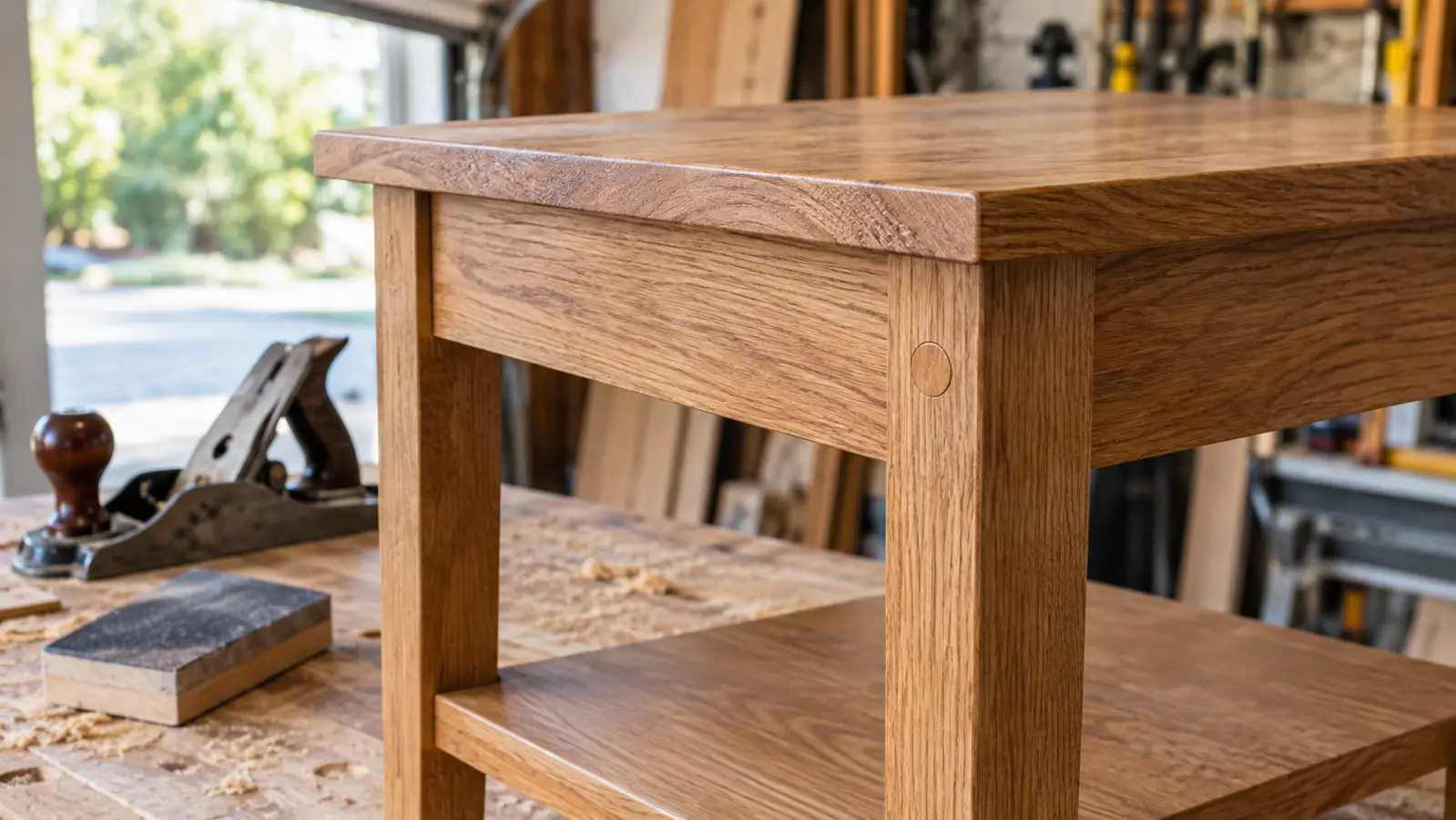
The first project was a pair of red oak end tables for the living room, the kind with a simple apron and straight legs. I drilled the apron joints with the Kreg R3 right on the bench, stacked the parts, and drove the screws with a driver bit in the same drill I had used to bore the holes. From the first hole to glue-up was an afternoon. Those tables are still square in the corner of that room, and they have survived a move, a grandson learning to climb, and one memorable Thanksgiving.
Before that, the same joint meant dowel centers, a jig I had to clamp in two directions, and a lot of test fitting on scrap. Pocket screws are not fine furniture joinery and I will not pretend they are. They are fast, they are strong in the direction that matters for an apron, and they let a man with one bench and a contractor saw build things that hold up under daily use. That is enough of a sales pitch for me.
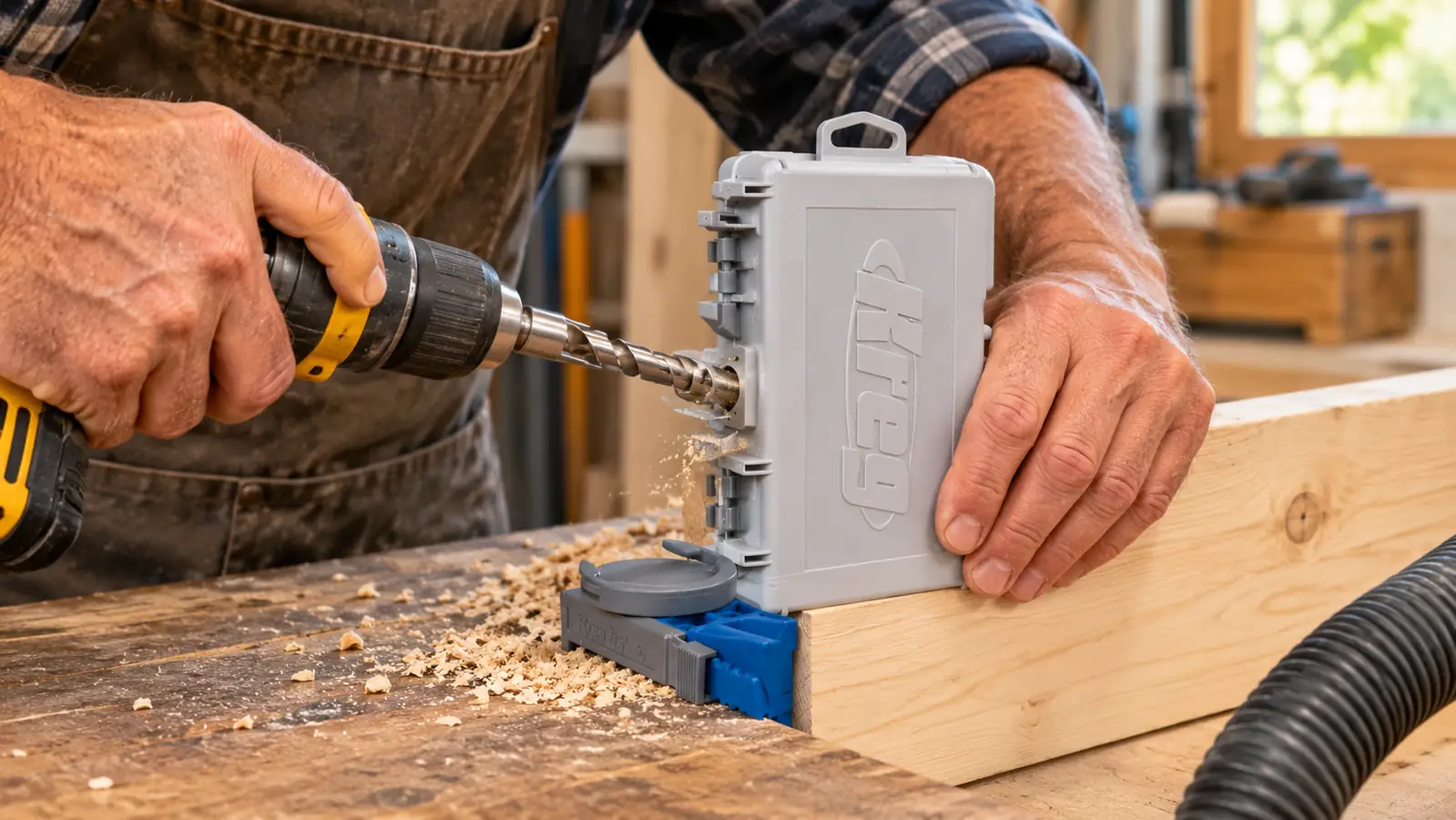
The second thing I noticed was how little the jig asks of the drill. The kit comes with a 6 inch driver bit and a depth collar, and the collar is the part that matters. You set the collar so the bit stops at the right depth for your material, then you set the slider on the jig, which gives you nine depth settings to choose from. Two adjustments, and then you are drilling. I have used the same corded drill for all of it, and I have never felt the need to buy anything special.
I have also used it on a bookshelf for Carol's paperback wall, a set of shop shelves, a small drawer unit, and a neighbor's kitchen cabinet face frame that had come loose after 20 years of a hot dishwasher running under it. That last job is where a small jig earns its money. I carried it across the street in the case, clamped it to the stile, and had the frame back where it belonged in about 20 minutes, with the dishes still in the cabinet.
The bookshelf is the one I would point to if you asked whether the thing is worth owning. I built it on a Saturday from start to finish, including a trip to the lumber yard, and it is holding maybe 200 pounds of paperbacks without a sag in the shelf or a gap at the seam. The joints are not invisible. They are plugged and sanded and painted, and from three feet away nobody knows how they were made. That is the honest bar for pocket screws, and this jig clears it.
What Nobody Tells You Before You Open the Box
The jig does not come with a face clamp. Read the included list and you will find the jig itself, the 6 inch driver bit, the Allen wrench, the depth collar, the clamp pad, and the compact carrying case. No clamp. The clamp adaptor that Kreg includes lets the drill guide work with most clamps you already own, which is genuinely useful, but you still need something to hold the jig down flat against the work while you drill. I already owned a face clamp, so it cost me nothing extra. If you own no clamps at all, plan on buying one before your first project.
The second thing nobody tells you is that the setup is where the mistakes happen, not the drilling. The depth collar is set with the Allen wrench, and it can slip if you do not get it tight. The first time I used the jig I set the collar by eye, drilled a test hole in scrap, decided it was close enough, and then watched a screw come through the face of a nice piece of oak by about a sixteenth of an inch. That is a mistake you make once and then you check the collar every single time, which is what I do now.
The third is chips. Pocket holes produce a small volcano of chips and dust right where you are standing, because the guide points the bit down and back toward your side of the bench. This jig has no dust port, so there is no hose to hook up. I keep the shop vac nozzle lying on the bench next to the work when I am drilling a run of holes, and I clean up after. It costs me an extra minute per session. It is not a reason to avoid the tool, but if you have read a review that never mentions the mess, that review was written by somebody who does not sweep up.
Setup also means matching the jig to material thickness. It will drill material up to 1.5 inches thick, and the nine settings on the slider cover the range from thin stock up to that number. A 2x4 is three and a half inches across and it is not going through this jig. That sounds obvious until you are standing in a cold garage at seven in the evening trying to make it work anyway, which I have done, and which is why I now keep a cutoff of every thickness I use in a bucket under the bench for test holes.
The Nine Depth Settings Do Most of the Work
The heart of the thing is a slider with nine depth settings. You pick the setting that matches the thickness of the board you are driving into, and the guide holds the bit so the screw exits where it should. Once I stopped guessing at the setting and started looking it up every time, my results got boring. Boring is what you want from a jig. Boring means the joint closes up at glue-up and you move on to the next thing.
Nine settings are more than I use. In practice I live on three of them. Three-quarter stock covers aprons, face frames, and shelf sides. Half-inch stock covers small boxes and drawer parts. There is a setting I use now and then for the odd piece of thicker material, and the rest of the range sits there waiting for the day I need it. Having the range is better than not having it, but do not buy this jig thinking you will spend your evenings exploring all nine positions. You will find the two or three you need and you will stay there.
The fixed angle is the other half of the story. The guide holds the bit at a consistent angle, so the pocket comes out the same from hole to hole. That consistency matters more than people give it credit for, and it is the reason I stopped fighting with the doweling jig I used for years. Small variations in angle show up later as gaps at glue-up, and gaps at glue-up show up in January when the heat comes on and the wood moves. With this jig, the twentieth hole looks like the first one. That consistency is the actual product here. The plastic body and the case are just how Kreg delivers it to your door.
The clamp pad is a small thing I did not expect to care about. It goes between the clamp and the jig and keeps the clamp jaw from biting into the jig body or marking softer work. It is a small part and it is easy to lose, so mine lives in the case, not on the bench. Get in that habit early.
Where It Slips
It drills one hole at a time, and it is a small jig, so it is not fast. If you are building a run of kitchen cabinets with 40 pocket holes in a session, you will feel every one of them in your shoulders and your patience. The larger benchtop jigs with a built in clamp and a wider fence are quicker for that kind of work. They also cost more and take up more room, which is the whole trade. There is no version of this where you get the speed of a big jig and the footprint of a small one.
The body is plastic. Mine has held up fine over years of hobby use, but I drill a few hundred holes a year, not a few hundred a day. If you knock it off the bench onto a concrete floor it will not bounce the way a cast metal tool would. Treat it like what it is, a small precision guide in a plastic frame, and keep it in the case when you are not using it. That is not a knock on the tool. It is a description of what you are buying.
The other honest limitation is that pocket screws are not a substitute for a mortise and tenon, and this jig cannot make them into one. On the cherry blanket chest I built for Jen, the carcass got pocket screws in places nobody will ever look, and the visible joints got real joinery and a lot of slow careful work. Knowing which joint goes where is the skill. The jig does not teach you that and no jig will. It just makes the hidden joints fast enough that you have time left for the visible ones.
One last thing, and it is the kind of thing that only shows up after a few years. Small jigs collect small parts. The collar, the pad, the Allen wrench. The case is the reason I have not lost any of mine, and the reason I would tell you to buy the version that comes with one rather than a loose jig rattling around in a bin.
What I Liked
- Fits on a shelf or in a drawer, at 8 by 2.25 by 5 inches and 1.3 pounds
- Nine depth settings cover material up to 1.5 inches thick
- Consistent pocket angle from the first hole to the hundredth
- Clamp adaptor works with most clamps you already own
- Comes in a compact case that keeps the collar, pad, and wrench together
Where It Falls Short
- No face clamp in the box, so you may need to buy one
- One hole at a time, which is slow on cabinet runs
- No dust port, so chips land on the bench and the floor
- Plastic body will not survive much abuse on concrete
- The depth collar can slip if you do not tighten it with the Allen wrench
The twentieth hole looks like the first one. That consistency is the actual product here.
Who This Is For
This is for the home woodworker with a small shop and a short project list. End tables, bookshelves, shop cabinets, face frames, a quick repair for a neighbor who caught you in the driveway. If your bench is a folding table in a garage and your tool storage is a shelf, this jig fits your life. It is also a sensible first pocket hole jig, because it is simple enough to learn in an afternoon and it does not punish a bad setup with anything worse than one ruined board you should have tested on scrap anyway.
It is also for the person who already owns a bigger jig and wants something to carry. The case is compact, the whole kit weighs about as much as a hammer, and it will drop into a toolbox or a bucket without any special arrangement. I have taken mine to two houses and a church basement for repair jobs, and it has never been the reason I had to make a second trip. Kreg built this one to travel, and it shows in the case more than in the jig.
Who Should Skip It
Skip it if you build cabinet runs, do production work, or drill hundreds of holes in a session. The larger jigs with a built in clamp and a wider fence exist for exactly that work, and the time you save is real money if you are selling what you build. Skip it too if you want dust collection built into the tool, because this one has none, and no amount of wishing will put a port on it. And skip it if you expect pocket screws to be fine furniture joinery. They are not. They are a fast, strong, honest way to join the parts of a piece that nobody sees.
What they are also good at is the parts people do see, provided you plug the holes and sand them flush and take your time with the finish. I have done that on two pieces and been happy with both. But if you want a jig that will drill a whole kitchen in an afternoon and never ask you to think about it, this is not that jig, and buying it expecting that will leave you irritated rather than pleased.
The small jig that earns its shelf space
If your shop is a garage and your projects are furniture sized, start here. My Kreg R3 has been on the shelf for years and I have never once thought about replacing it with something smaller, because there is nothing smaller that still does the job.
Amazon Check Today's Price on Amazon →